

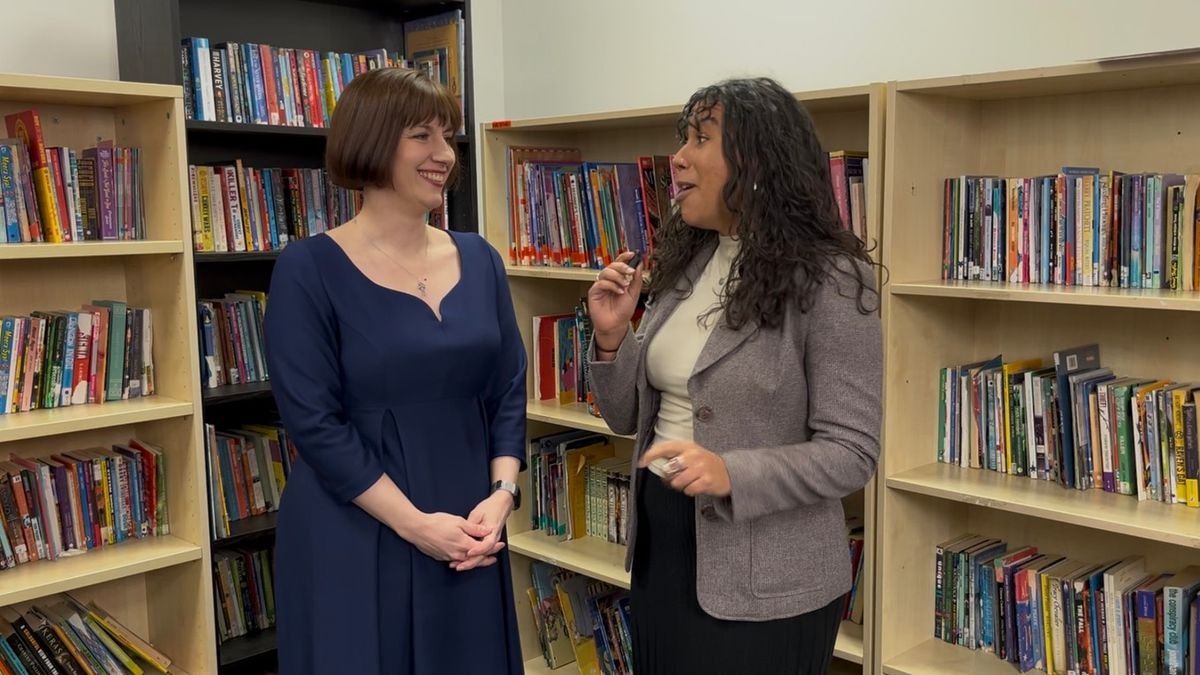

Returning to one’s former school is a rare occasion in life. Today, I revisited Ormiston Bushfield Academy in Peterborough for a significant address by Education Secretary Bridget Phillipson. Both my younger sister and I were students there, and we also worked at the school following our education.
Listening to Ms. Phillipson’s speech in the auditorium where I once attended morning assemblies was a nostalgic experience. The room, now filled with Westminster journalists, my former teachers, and current students, held memories of my past performances during musicals like Cats and Fame on the same stage Ms. Phillipson stood on.
During her speech, Ms. Phillipson emphasized the transformative impact of great schools and teachers on children’s lives, a sentiment that resonated with me. After the address, I had the chance to express my gratitude to my former English teacher for sparking my passion for writing, without which I wouldn’t have pursued a career in journalism.
Ms. Phillipson’s personal journey from a council estate to a leadership role has driven her commitment to reform the education system through a groundbreaking Schools White Paper worth £7 billion. The proposed changes aim to revolutionize support for children with special educational needs and disabilities, focusing on inclusive practices in mainstream settings that could have greatly benefited the students I once worked with.
While the ambitious plans have been welcomed by teachers’ unions, concerns linger regarding the adequacy of funding to provide the necessary additional staff in mainstream schools. Ms. Phillipson remains optimistic that the government’s broader initiatives on early intervention, family support, and poverty alleviation will alleviate pressures in schools.
My visit to my alma mater underscored the pivotal role schools play in shaping a child’s life and highlighted the disparities in education quality across different areas. I am thankful for the exceptional education and mentorship I received at a remarkable school.
Labour’s commitment to ensuring a bright future for all children, particularly those from disadvantaged backgrounds and with special needs, will be crucial in addressing educational inequalities.