

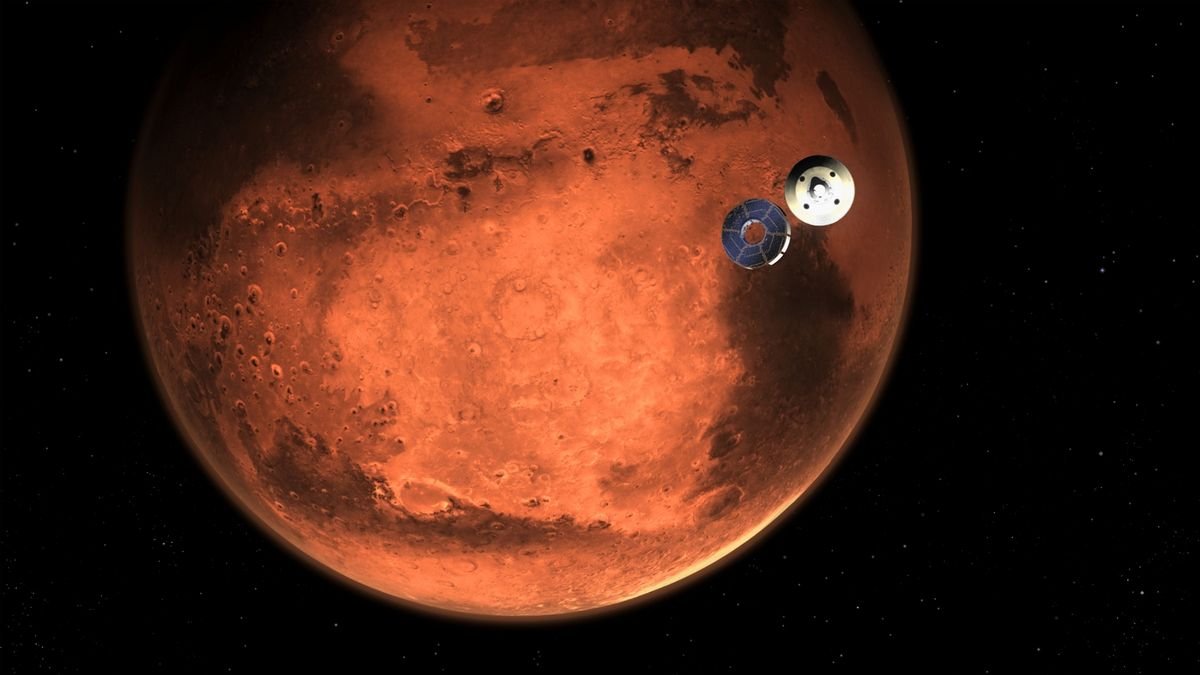

NASA’s Mars rover has made a groundbreaking discovery of potential life on the red planet. The rover identified signs of free-flowing water and conditions that indicate the presence of living organisms. Scientists found 24 minerals in the Jezero Crater, suggesting that volcanic rocks were altered by water interactions multiple times, creating habitable environments. This research, led by Rice University, indicates that Mars may have supported life on various occasions.
The study revealed that the crater experienced different episodes of water alteration, including high-temperature acidic water, neutral conditions, and low-temperature alkaline environments. These conditions are believed to be conducive to life. The Jezero Crater, where NASA’s Perseverance rover is currently exploring, was once an ancient lake and river delta.
To analyze the rover’s data, researchers utilized the Mineral Identification by Stoichiometry (MIST) algorithm in conjunction with the Planetary Instrument for X-ray Lithochemistry (PIXL). Various minerals found in the crater suggested different environmental conditions. While some minerals formed in harsh, acidic environments, others developed in more neutral or alkaline waters, which are considered more favorable for sustaining life.
The diversity of minerals in the Jezero Crater provides insights into the evolution of Mars’ environment over time. The study’s findings not only enhance our understanding of Mars but also lay the groundwork for potential future sample return missions. This research underscores the significance of exploring Mars for clues about the possibility of past or present life on the planet.