


For years, Donald Trump frequently used age and mental acuity as key elements in his political strategy. He consistently taunted Joe Biden, employing a series of derogatory nicknames to suggest to voters that Biden was aged, confused, and unsuitable for office. Trump not only cast doubt on his opponent’s endurance but turned it into a regular spectacle.
Now, with Trump resuming power at the age of 79, the focus has shifted from Biden to questioning Trump’s own condition. Concerns regarding the president’s mental well-being are no longer confined to social media or political attacks; they are now being quietly and sometimes openly raised by diplomats, allies, and officials who have interacted with him directly.
Reports indicate that worries about Trump’s health are increasingly becoming a topic of discussion at various levels in European capitals, raising significant concerns. Slovak Prime Minister Robert Fico, a political supporter of Trump, reportedly expressed concerns about Trump’s “psychological state” to fellow European leaders after a recent meeting with the US leader.
Witnesses described Fico as “shocked,” with one individual stating that Fico went as far as labeling Trump as “out of his mind,” while another mentioned that he seemed “traumatized” by the encounter. This sentiment was not unique.
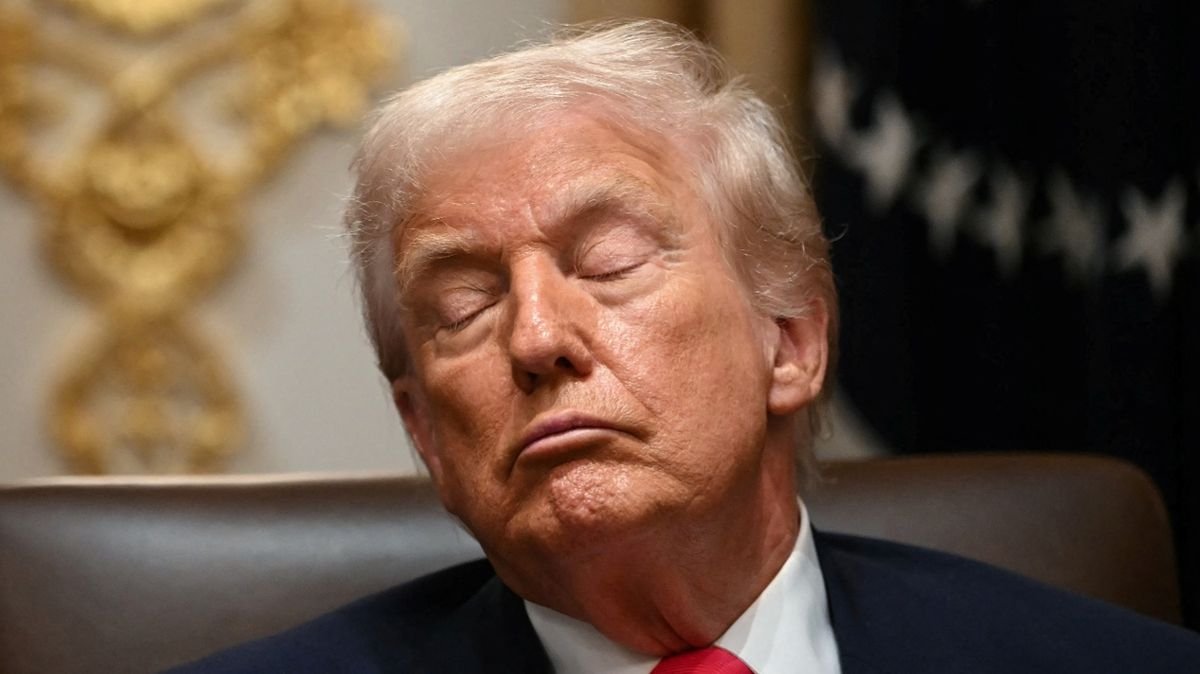
During a critical White House meeting with leaders from the fossil fuel industry earlier this year, Trump diverted attention to his ballroom construction project, displaying a lack of focus in a setting that required serious engagement. There have been instances where Trump has been observed falling asleep during crucial meetings, even in the presence of world leaders.
While occasional fatigue is understandable, recurring incidents, combined with escalating irritability, disjointed speech, and apparent memory lapses, collectively present a troubling picture that cannot be easily dismissed as harmless idiosyncrasy.
Physically, there are also worrying signs. Trump’s ankles frequently appear swollen, and his hands show signs of bruising. The White House attributed the bruising to extensive handshaking and long-term aspirin usage, confirming a diagnosis of chronic venous insufficiency, a common condition affecting older adults and impacting blood circulation.
Although these factors do not conclusively indicate mental decline, they underscore a fundamental truth that Trump previously highlighted about Biden: age and health are crucial factors, especially when dealing with matters like nuclear codes and global stability.
The current situation is particularly striking given Trump’s history of capitalizing on Biden’s verbal missteps and fatigue. Trump exploited every opportunity to highlight any signs of weakness, demanded cognitive assessments, and encouraged public ridicule.
Now, as questions arise about his own behavior, Trump reacts defensively and lashes out at those who raise concerns. There is a growing perception that his temperament has shifted, with allies noting increased volatility, distraction, and outbursts of anger.
Trump’s recent erratic actions, from proposing the acquisition of Greenland to threatening to dismantle alliances, are no longer viewed as calculated provocations but as impulsive reactions. When even friendly foreign leaders depart meetings unsettled, it is reasonable to question what is happening. This is not about scoring political points or armchair diagnosis but about ensuring that the individual holding the highest office in the world is mentally and physically capable.
Trump once emphasized the importance of transparency regarding health and age, and by his own standards, he should now be subject to the same scrutiny. Silence or avoidance of uncomfortable truths poses the real danger. If world leaders are already expressing concerns about Trump’s stability in private discussions, the public deserves honesty and transparency. Delaying action could have grave consequences for America and the global community.
The era of mocking Biden has passed, yet the unanswered questions linger.