

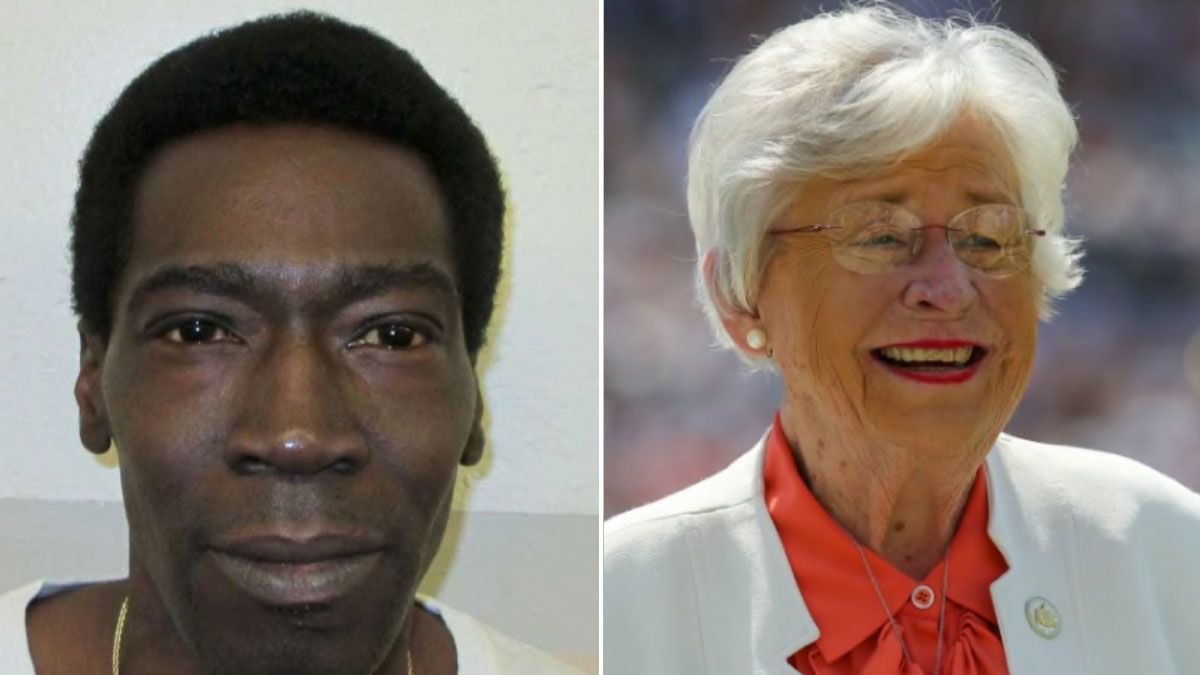

An individual on death row, who had maintained his innocence for over three decades, was put to death today for a murder conviction.
Anthony Boyd, aged 54, was executed in an Alabama jail despite his repeated claims of not being involved in any killing. He had made a final plea to the state governor to intervene before his execution, but it proceeded as scheduled on Thursday.
Boyd was found guilty of assisting in the burning of Gregory Huguley in 1993 over a drug-related debt. He spent the following 30 years on death row at William C Holman Correctional Facility in Atmore, Alabama.
Moments before the execution by nitrogen gas, Boyd reiterated his innocence and criticized the justice system. He expressed love to supporters and concluded with the words, ‘Let’s get it.’
Boyd exhibited physical reactions after the gas was administered, clenching his fist and raising his head and legs briefly before ceasing movement minutes later.
Alabama implemented the use of nitrogen gas for executions last year, a method that has faced criticism. This was the seventh time it was used in Alabama and once in Louisiana.
The Reverend Jeff Hood, who witnessed the execution, condemned the method, labeling it as the worst execution he had seen and criticizing the execution process.
Boyd had requested to be executed by firing squad, a plea that was denied. Despite his efforts to communicate with the Alabama governor, it seems no meeting took place before the execution.
During the 1990s trial, it was revealed that Boyd had participated in the immobilization of Mr. Huguley before he was set on fire. Despite his alibi, Boyd was convicted by a majority vote and sentenced to death.
Following Boyd’s recent attempts to overturn his sentence, Alabama Attorney General Steve Marshall affirmed the state’s commitment to upholding the law and delivering justice to victims and their families.
Marshall added that Boyd had engaged in prolonged litigation without presenting evidence to challenge the jury’s decision throughout the past three decades.
At Reach and across our entities we and our partners use information collected through cookies and other identifiers from your device to improve experience on our site, analyse how it is used and to show personalised advertising. You can opt out of the sale or sharing of your data, at any time clicking the “Do Not Sell or Share my Data” button at the bottom of the webpage. Please note that your preferences are browser specific. Use of our website and any of our services represents your acceptance of the use of cookies and consent to the practices described in our <a data-testid="cipa-privacy-notice-link" href="