

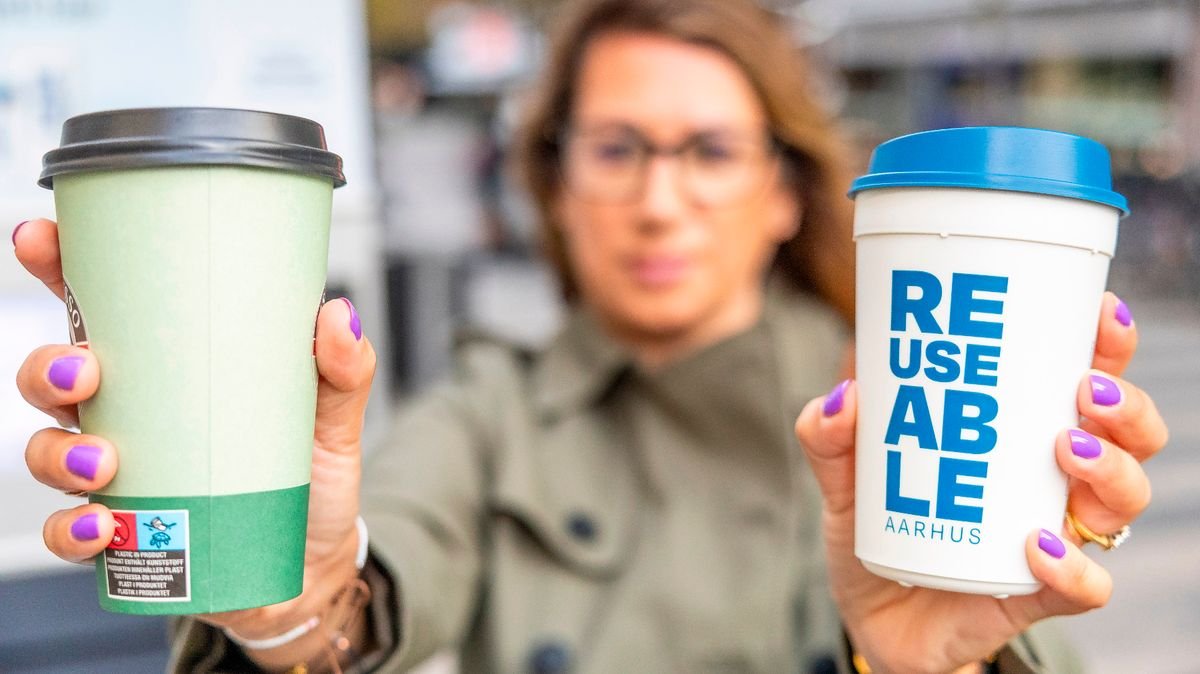

Each year, approximately 50 billion single-use beverage cups are utilized and promptly discarded worldwide, leading to litter on various landscapes and water bodies. The slow decomposition of these cups, particularly those with plastic linings, can result in the release of harmful microplastics into the environment, posing risks to wildlife and contaminating water systems.
In response to this crisis, Aarhus, a city in Denmark, has introduced a pioneering city-wide reusable drinks program to combat the issue. This initiative has prevented thousands of cups from ending up in landfills, thus preventing pollutants from seeping into the environment.
Instead of disposing of these cups, residents in Aarhus can use any of the 27 deposit machines in the city to return them for washing and redistribution to retailers. The process involves a straightforward system where a deposit, roughly 80 pence, is refunded directly to the individual’s bank account by swiping a credit card at the machine.
Simon Smedegaard Rossau, the project manager for circular systems in Aarhus, envisions a city without waste bins and emphasizes the importance of preventing pollution from microplastics. The program has already seen over 1.25 million cups returned, equivalent to diverting 16 tonnes of waste from landfills.
The success of the program, boasting an 88% return rate, has garnered interest from other cities looking to adopt similar models. Lisbon has already introduced a reusable drinks scheme for beer cups following Aarhus’s lead.
The initiative in Aarhus exceeded its initial goal of collecting 500,000 cups in the first year, with 735,000 cups returned, saving 14 tonnes of plastic from incineration. The city aims to collect 1.5 million cups by 2025, expanding to include other forms of food packaging in the future.
The implementation of such programs underscores the urgent need to address the escalating waste crisis in cities. Circular systems like these are crucial in minimizing waste, protecting the environment, and conserving resources. The success of Denmark’s reusable cup system serves as a model for other European cities to follow suit.
RELOOP’s Global Networks Director, Jenni Hume, emphasizes the importance of sustainable systems that promote reusability to combat the challenges posed by single-use items. The positive impact of such initiatives extends beyond waste reduction to include conservation efforts and mitigating environmental pollution.