

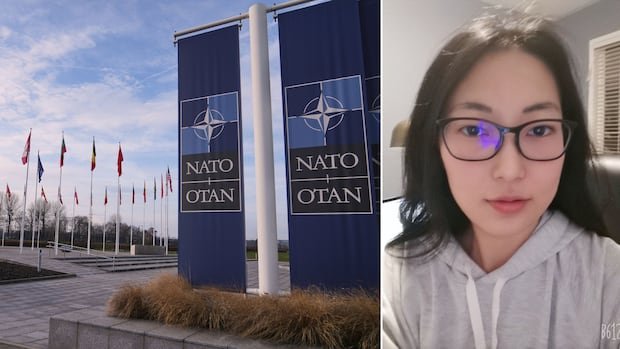

A parliamentary committee in the House of Commons has agreed to investigate Canada’s security screening procedures following the arrest of a Canadian NATO intern by Belgian authorities on charges of espionage.
This decision was made after the Conservatives and Bloc Québécois demanded an emergency committee meeting to look into the spying accusations against the intern. During a meeting of the public safety and national security committee, Members of Parliament from various parties agreed to prioritize meeting three times to delve into the issue when Parliament resumes in September.
The committee plans to summon Public Safety Minister Gary Anandasangaree as a witness and may call other relevant witnesses as needed. Subsequently, it will present its findings and recommendations to the House.
Although the identity of the defendant in the Belgian criminal investigation remains undisclosed, a CBC News investigation revealed the accused spy to be Biwei Zhang, a systems engineer with an economic background who was interning at NATO’s Supreme Headquarters Allied Powers Europe (SHAPE) in Mons, Belgium.
It was discovered in the investigation that Biwei Zhang goes by the professional name Claire Zhang and uses the name Catina Zhang on her Facebook profile. Belgian authorities suspect Zhang of spying on behalf of a foreign country and allege her involvement in a criminal organization.
The Chair of the public safety committee received an open letter from Conservative public safety critic Frank Caputo, urging for parliamentary scrutiny due to the gravity of the allegations against Zhang. Caputo raised concerns about how an individual facing spying charges managed to secure an internship within a significant military alliance of Canada and questioned the efficacy of security screening and monitoring processes in place at that time.
The internship Zhang acquired at NATO required a thorough security clearance, a process that Canadian authorities, specifically the RCMP and CSIS, would have overseen as she is a Canadian citizen.
Following the arrest of the alleged spy by Belgian authorities, Canada’s public safety minister pledged to investigate the matter thoroughly, emphasizing the seriousness of the charges. Prime Minister Mark Carney later confirmed Canadian officials’ involvement in the investigation.
CBC News also revealed that Zhang had previously held positions in various Canadian government departments, including roles as an economist at Statistics Canada and a systems engineer at the Canadian Space Agency. The investigation uncovered that in 2023, Zhang was found to have committed fraud by applying for a position at the Canada Border Services Agency under different identities, leading to a judicial review in 2024 where her application was dismissed.
Furthermore, Zhang had worked at the World Trade Organization in Geneva and the European Space Agency in Italy, and recently completed a master’s degree in computer science specializing in artificial intelligence from the University of Ottawa.
Before her arrest on charges of espionage and involvement in a criminal organization, Belgian authorities conducted searches at Zhang’s residence and workplace at SHAPE.