

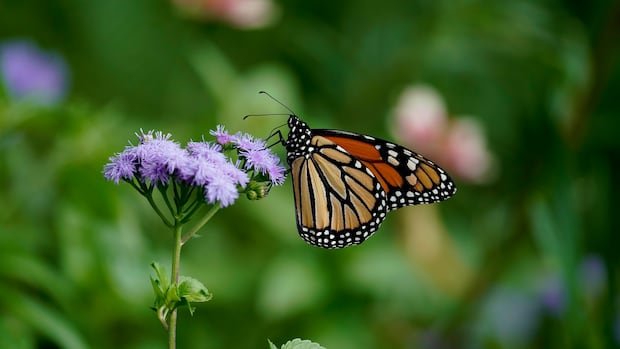

MaryAnn Lepp is amazed by the abundance of monarch butterflies undergoing their remarkable transformation in her garden. She observed 20 caterpillars feasting on her swamp milkweed in just one day this week. This phenomenon is not unique to her, as many Canadian monarch enthusiasts are witnessing a surge in these beautiful creatures in their backyard milkweed patches, thriving in the wet and hot conditions of the Prairie this summer.
The increase in sightings of caterpillars, chrysalises, and monarch butterflies has sparked excitement among butterfly enthusiasts, who are documenting the phenomenon on social media platforms like Manitoba Monarch Mission. While experts cannot definitively attribute the surge to favorable weather, they agree that the growing number of monarchs is a positive sign for this federally endangered species known for its annual migration between Canada and Mexico.
Marika Olynyk, curator of the Living Prairie Museum, noted a significant presence of monarchs in Winnipeg this year, emphasizing the continuous sightings of caterpillars, chrysalises, and butterflies throughout the summer. The prairie museum’s tall grass preserve, abundant with native plants that attract pollinators, including various milkweed species, serves as a vital habitat for monarch butterflies.
Despite the efforts of individuals like Lepp in planting milkweed and native wildflowers, these essential plants are not as abundant or widespread as they once were due to habitat loss caused by the conversion of native grasslands to farmland. Olynyk highlighted habitat loss as the primary threat facing monarch butterflies, underscoring the urgent need for conservation efforts to protect this iconic species.
The monarch’s endangered status was officially recognized in 2016, prompting increased conservation measures to safeguard their populations. The federal government later reinforced protection by making it illegal to harm or capture monarchs on federal lands. However, the population’s sustainability remains a concern, with experts estimating that only about half of the necessary population levels have been reached.
In addition to the resurgence of monarch butterflies, there have been positive developments for the critically endangered Poweshiek skipperling butterfly. The Assiniboine Park Zoo has been instrumental in breeding and releasing these imperiled butterflies, witnessing a hopeful increase in their numbers this summer. The zoo’s efforts, coupled with favorable weather conditions, have contributed to the potential recovery of the Poweshiek skipperling population.
As conservation efforts continue, the zoo plans to track monarch butterflies’ migration using radio transmitters to monitor their journey to Mexico. Meanwhile, dedicated enthusiasts like Epp remain committed to nurturing caterpillars and chrysalises under their care, playing a crucial role in preserving these delicate creatures and fostering a deeper connection with nature.