

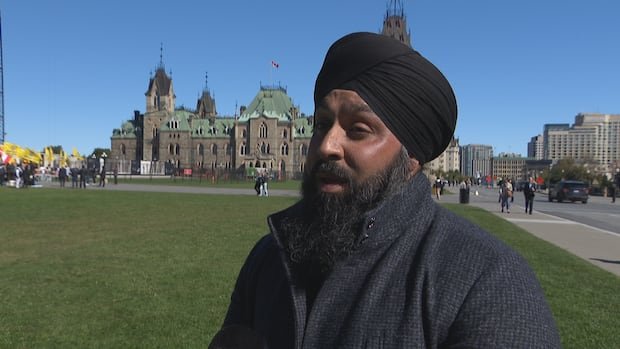

Another Sikh Canadian activist has received a “duty to warn” letter, raising doubts about the Carney government’s assertions regarding their handling of Indian government foreign interference and transnational repression.
Inderjeet Singh Gosal disclosed that he was given the warning on August 14 after being contacted by the RCMP in Caledon, Ont. These letters are issued by law enforcement when there is credible intelligence indicating a threat to a citizen’s life, without specific details about the threat.
Gosal confirmed the receipt of the letter, signed by two RCMP members and himself as the “Intended Victim.” He mentioned that the RCMP reiterated an offer to enroll him in a witness protection program, which he declined, expressing his commitment to advocating for the Khalistan referendum.
Khalistan refers to the proposed independent Sikh homeland in India’s Punjab region, with Sikh separatists conducting non-binding referendums in various diaspora communities worldwide since 2021, causing tension with the Indian government.
Following the assassination of Hardeep Singh Nijjar, who led the Canadian referendum campaign, Gurpatwant Singh Pannun appointed Gosal as his replacement. Gosal revealed that this latest letter marks his sixth official police warning.
The issuance of such warnings has increased during the Carney government’s efforts to normalize relations with India, following strained ties and allegations of Indian involvement in Nijjar’s killing. Despite Canada’s focus on enhancing commercial links with India, duty to warn letters persist, indicating ongoing threats.
Additionally, Canada has faced scrutiny from UN rapporteurs regarding its handling of threats to Canadian Sikhs like Moninder Singh, questioning the government’s effectiveness in safeguarding these individuals. Gosal acknowledged the RCMP’s efforts in notifying him of the threats but criticized the government’s approach.
While India denies involvement in Canadian violence, Gosal remains resolute in his advocacy for the Khalistan cause, highlighting the upcoming referendum in Edmonton as a democratic exercise despite external pressures.
This latest development underscores the ongoing challenges faced by Sikh activists in Canada amidst geopolitical tensions and concerns over foreign interference.