

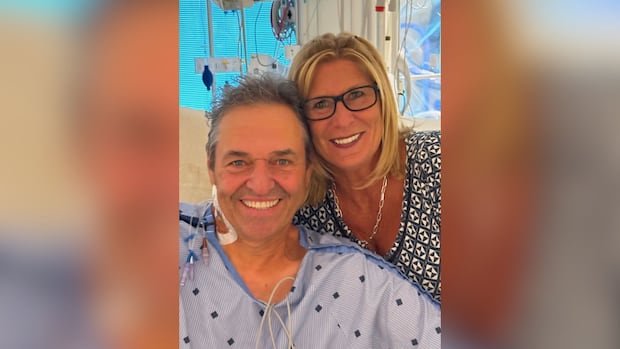

A Quebec man, aged 64, has made history in North America by being the first recipient of a regenerated liver using an innovative technology that could potentially increase the availability of transplantable livers by dozens in its initial year. Gérard Landry, residing in Nouvelle on Quebec’s Gaspé Peninsula, struggled with liver issues for approximately 15 years, eventually leading to cirrhosis and liver cancer.
Just before undergoing a liver transplant procedure, Landry received surprising news from his doctor regarding the organ: it had been regenerated using a novel machine introduced for the first time at Montreal’s Centre hospitalier de l’Université de Montréal (CHUM). Describing it as akin to a Christmas gift, Landry expressed his gratitude for the development.
The revolutionary technology, named Liver Assist, enables medical professionals to treat and evaluate a donated liver externally before implantation. This advancement allowed Landry to receive a liver that might have been deemed too risky for transplant under usual circumstances.
Dr. David Hénault, a hepatopancreatobiliary surgeon and liver transplant expert at CHUM, spearheaded the project and conducted Landry’s surgery. The Liver Assist system functions by linking a donated liver to a machine that circulates an oxygen-rich solution through the organ, potentially reversing oxygen deprivation-induced damage while the liver is outside the body.
By transitioning to a blood-based solution, physicians can assess the liver’s functionality under conditions simulating the human body. Hénault emphasized that if the liver performs well on the machine, it is likely to function effectively inside the recipient.
CHUM typically conducts around 70 liver transplants annually. Hénault mentioned a collaboration with Transplant Québec to assess previously rejected livers for transplant suitability using the new technology. The team anticipates that approximately 20 to 24 additional livers could become available for transplantation in the technology’s inaugural year, with potential growth as its usage expands.
Apart from enhancing liver availability, studies indicate that the technology may reduce complications, reoperations, and hospitalization durations for suitable candidates. Landry experienced a successful transplant post-surgery, with his blood work showing better-than-expected results the day after the operation, prompting Hénault to credit the machine for its assistance.
As Landry continues to recuperate in Montreal, undergoing regular blood tests for medication adjustments, his ultimate goal is to return to Gaspésie for ongoing recovery. Eager to reunite with his family, including his grandson, friends, and horses, Landry hopes his journey will inspire discussions about organ donation, emphasizing the critical role of available organs in saving lives.