

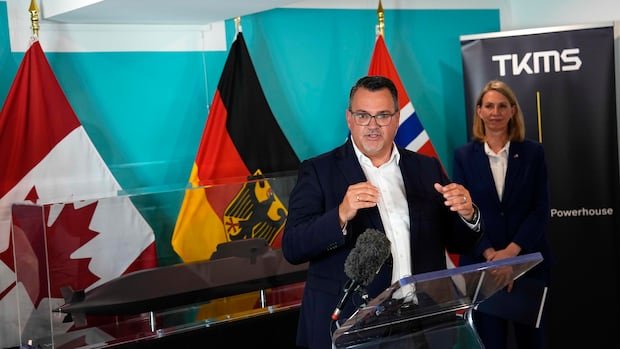

The chief executive officer of ThyssenKrupp Marine Systems (TKMS), the German company selected to construct Canada’s new submarines, is advocating for increased collaboration among European shipbuilders. This initiative may have implications in Canada as the navy evaluates the potential addition of corvettes to its fleet. Oliver Burkhard emphasized the recent partnership between TKMS and the Spanish government-owned Navantia S.A., focusing on exploring joint naval projects and potential production of TKMS submarine designs at Navantia’s shipyards in Spain.
Burkhard highlighted the growing demand for warship construction, noting the shift from having time but no money to having money but no time in the market. A report by Imarc projected a more than five percent increase in demand for warships over the next decade. Aside from submarines, the Canadian navy is currently constructing River-Class destroyers and has expressed the need for smaller, cost-effective, ice-capable corvettes. The destroyers are being built by Irving Shipbuilding in Halifax, while the submarines, due to Canada’s lack of modern submarine building expertise, will be constructed in Germany.
Burkhard, ahead of his visit to Ottawa, mentioned that TKMS is the preferred supplier for Canada’s submarine program. He anticipated a quicker contract signing given the government’s expedited process. While the idea of supplying the MEKO A-100 corvette design to a Canadian shipyard was considered during the submarine bid, Burkhard confirmed that there have been no discussions with Canadian officials regarding exporting the package for construction in Canada.
The Canadian navy identified the need for corvettes last year and has been evaluating the role and capabilities of such a warship. Rob Huebert, a defense expert, emphasized the importance of military necessity in defense procurement and supported the need for corvettes. He welcomed Burkhard’s recognition of the need for rapid rearmament in various nations, including Canada.
Huebert also commended the closer collaboration among European shipyards, especially in submarine construction, citing the need for such partnerships due to the varying capacities of different shipyards. Burkhard likened the current market conditions in shipbuilding to the 1960s when European aerospace companies created Airbus due to empty order books and stiff competition from U.S. defense contractors.
While acknowledging the complexity of establishing a maritime equivalent of Airbus, Burkhard suggested that the industry could lead the way in fostering closer partnerships. He noted that industry-led initiatives could overcome political challenges that typically arise from national interests. The need for enhanced partnerships among European defense companies was previously highlighted by the Center for Strategic and International Studies (CSIS) in a study three years ago, emphasizing the increasing defense spending in Europe coupled with limited cooperation among countries.