

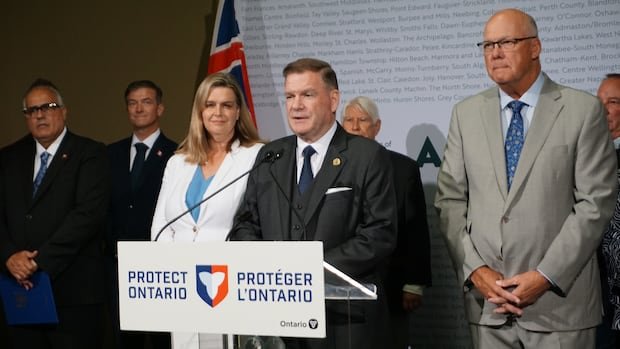

The Ontario and Canadian governments have jointly allocated $1 billion to support municipalities that do not impose development charges in enhancing and maintaining essential infrastructure. This initiative was unveiled by Todd McCarthy, Ontario’s acting minister of infrastructure, Rob Flack, Ontario’s minister of municipal affairs and housing, and Jennifer McKelvie, parliamentary secretary to the federal minister of housing and infrastructure, during the Association of Municipalities of Ontario (AMO) conference in Ottawa.
Under the new Municipal Housing Infrastructure Program (MHIP), each government level will contribute $500 million to establish a specific funding stream for municipalities that do not collect development charges. This stream aims to assist these communities in funding crucial infrastructure such as bridges, roads, and water systems to support new housing developments and safeguard existing housing stock.
During the announcement, McCarthy expressed optimism about the collaboration between federal, provincial, and municipal entities in achieving common goals. Initially, there was a miscommunication regarding the $1 billion funding being separate from the $8.8 billion pledged earlier; however, it was clarified that the new funding is part of the existing agreement.
Furthermore, the City of Toronto has already received up to $1.5 billion to offset reduced development charges, while Ottawa plans to slash charges by 54% to secure $478 million in infrastructure funding. Premier Doug Ford highlighted the high demand for funding and encouraged municipalities to lower development charges further, with a promise to provide additional support if needed.
The application process for the new funding stream will commence on October 29, with project selections expected in the spring. Mississippi Mills Mayor Christa Lowry, chair of the Rural Ontario Municipalities Association (ROMA), lauded the funding, emphasizing the growth potential for numerous municipalities not imposing development charges.
Additionally, the funding initiative addresses the economic uncertainties posed by U.S. tariffs, aiming to boost local economies by alleviating the financial burden of infrastructure development. Robin Jones, outgoing president of AMO and Westport Mayor, commended the move, noting the challenges faced by rural, small, and northern communities in managing infrastructure pressures.
In a separate development, the Ontario Big City Mayors (OBCM) group reiterated concerns about homelessness and addiction crises, urging the province to take decisive action. The group called for the establishment of a dedicated ministry for addiction issues, expansion of treatment options, and a review of relevant legislation, advocating for a state of emergency declaration.
Mayor Marianne Meed Ward of Burlington, chair of the OBCM, stressed the need for comprehensive measures to address the crises. She emphasized the importance of exploring all available avenues to tackle these pressing issues. Meed Ward planned to engage with provincial officials during the ongoing AMO conference in Ottawa, where Ontario Premier Doug Ford is scheduled to speak.