

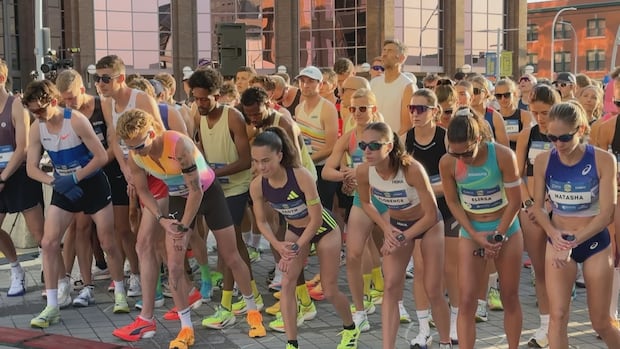

Just two days after participants finished the Edmonton Marathon, the race director has issued an apology following the discovery of a miscalculation concerning detours that resulted in longer race distances.
This admission corroborated the suspicions raised by many runners.
In a statement released on Tuesday afternoon, Tom Keogh, the race director for the Edmonton Marathon, revealed that both the half-marathon and marathon courses were actually 674.7 metres longer than initially believed.
Keogh stated, “The previous assurance regarding confidence in the course certification was made based on the best information available at that time,” and noted that officials had conducted a comprehensive evaluation of the course.
“This review identified a mistake in the calculations for this year’s detour-related adjustments, and we sincerely apologize for that,” he continued.
“The extra distance added due to the Wellington Bridge detour was somewhat counterbalanced by adjustments to the turnaround point at the course’s west end. However, it was determined that the turnaround point did not completely compensate for the detour’s additional distance.”
Keogh emphasized that the Edmonton Marathon “takes responsibility for this mistake.”
“We fully accept accountability,” he expressed. “We are grateful to the numerous participants who reached out via email, as well as those with whom we have had further discussions.”
Before the statement was made, both elite and amateur runners had voiced their concerns regarding the distances of the race. Four runners shared with CBC News on Monday that they felt they had run further than expected.
On Monday, Keogh informed media outlets that the courses had been accurately measured and verified on race day.
“Despite our efforts to achieve the highest standards of course measurement and certification, an error occurred,” Keogh remarked on Tuesday.
Athletics Canada, the sport’s national governing body, stated to the media on Monday that it also had confidence in the course measurement and certification processes. As of the time of publication, Athletics Canada had not released its own statement regarding the Edmonton Marathon’s updated stance on the matter.
“We are collaborating directly with Athletics Canada and other relevant organizations to determine how the results of this year can be recognized,” Keogh stated, acknowledging that the race was a qualifier for major events, including the Boston Marathon.
Calgary runner Mitch Walz dedicated a year to training for the Edmonton marathon, aiming for a finish time of 2:59, which would not only meet the 3:05 Boston Marathon qualifying standard for his 40-44 age group but also provide a buffer in case many runners achieved that standard.
Walz estimated that he completed 42.2 kilometres — the official marathon distance in Edmonton — in 2:59, but his chip time upon crossing the finish line was recorded as 3:03 on Sunday morning.
On Tuesday, Walz shared with CBC News that the last few days had been a whirlwind of emotions.
“While I achieved one of my goals and ran a race I could only have imagined or dreamed of, it feels as if everything was taken away from me,” he reflected.
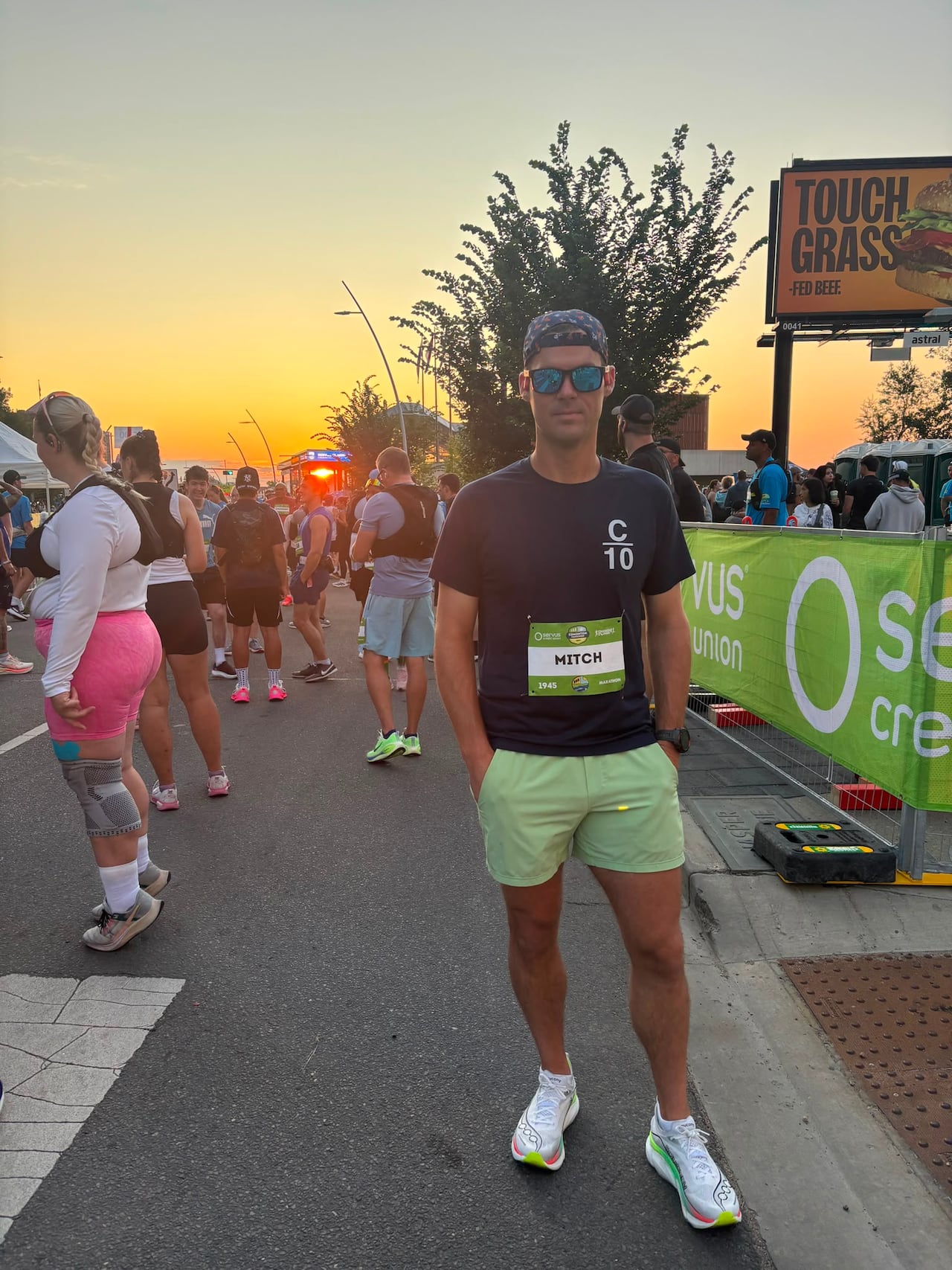
Mitch Walz stands near the start line at the Edmonton Marathon. (Supplied by Mitch Walz)
Walz noted that he had been maintaining his target paces during the first half of the race, but felt deflated upon reaching the course marker that indicated there were three kilometres remaining, as he could not understand what had gone wrong.
With the knowledge he has now, he expressed pride in his performance but wished he could have pushed harder during the final kilometres.
“We do not take this lightly,” Keogh stated. “We recognize that every participant arrives at the start line after months of dedicated training, hard work, courage, and significant goals.”
“We also realize that we hosted the nation’s top athletes, and their finishing times did not accurately reflect their remarkable performances.”
Walz shared that running in Boston would mean a great deal to him, and he hopes to still secure a spot in that race.
Regarding whether he would participate in the Edmonton Marathon again, he initially said no, but considering that mistakes can happen, he would contemplate running in the event once more.
“Going forward, we will review our certification processes in collaboration with our partners to ensure this error is not repeated,” Keogh concluded.
On Wednesday, the Boston Athletic Association stated to CBC News that it cannot accept adjusted results if the distance is either over or under, nor can it modify results if participants stray off course.
However, the association confirmed to The Canadian Press that if an athlete runs a longer distance than required but still achieves a qualifying time for the marathon, they will still qualify.