

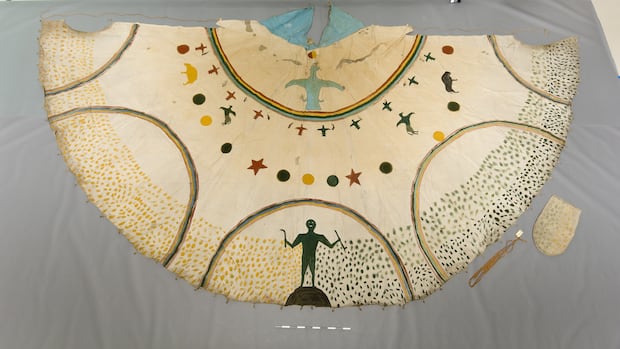

A professor from Saskatchewan has uncovered a significant part of the province’s heritage within the Smithsonian’s collection in Washington, D.C. It is now set to return home.
Andrew Miller, who teaches Indigenous studies at the First Nations University of Canada, was browsing the Smithsonian’s inventory while researching avian species when he came across a teepee cover that had been taken from the Kawacatoose First Nation nearly a century ago.
The cover was removed in the 1920s, but the family has kept its legacy alive by recounting its history through the generations.
“I remembered a student saying, ‘Oh, yes, we have items that are in major museums in the United States,'” Miller recounted.
As he perused the catalogue, Miller recalled that comment and noticed the teepee cover, which was marked “Dustyhorn—File Hills” with an acquisition year of 1926.
He recognized that there are Dustyhorn family members in the Touchwood area, so he reached out to Cory Dustyhorn, the current chief of the Kawacatoose First Nation, regarding his discovery.
Dustyhorn was aware of the tale of his great-great-grandfather Sîpiskwêsîkan’s teepee being taken long ago. Sîpiskwêsîkan was promised compensation for the teepee cover, which he never received.
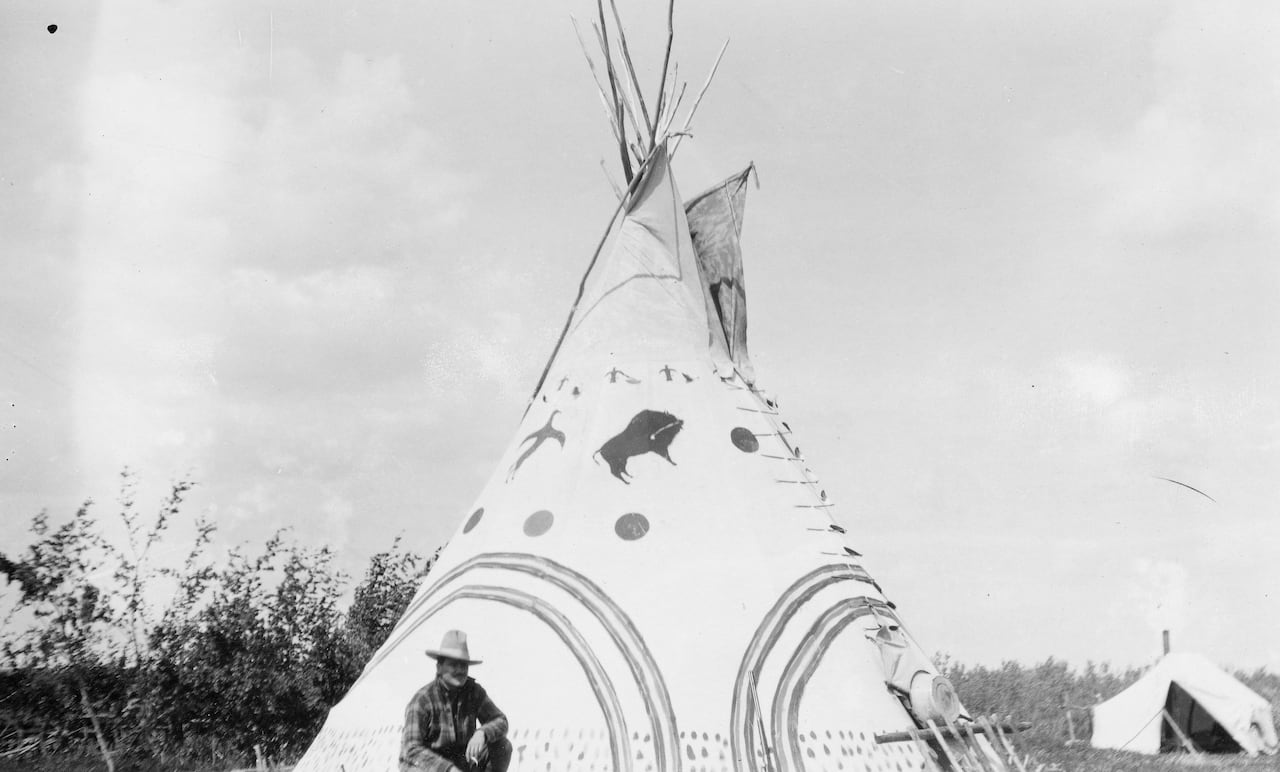
This historical image shows the teepee cover when it was first acquired by the Smithsonian. (Submitted by Andrew Miller)
Miller and Dustyhorn reached out to the museum, where Miller found the Smithsonian to be very accommodating throughout the process.
“They understand that some of these items should not be part of their collection, as they were acquired during a time when ethical considerations and mutual respect between cultures were lacking,” Miller stated.
-
Indigenous artifacts held in Vatican Museums finally heading back to Canada
-
Dozens of artifacts repatriated after donation to Chief Poundmaker Museum
The museum was receptive to Dustyhorn’s input and agreed to the repatriation of the teepee cover, ensuring it would be sent to the appropriate community.
“I shared a family story that mentioned how someone began collecting artifacts in Alaska before coming to Saskatchewan and taking our teepee,” Dustyhorn explained.
He noted that museum representatives interrupted him, confirming that the individual who acquired the teepee in 1926 did indeed start his journey in Alaska, thereby validating the oral history.
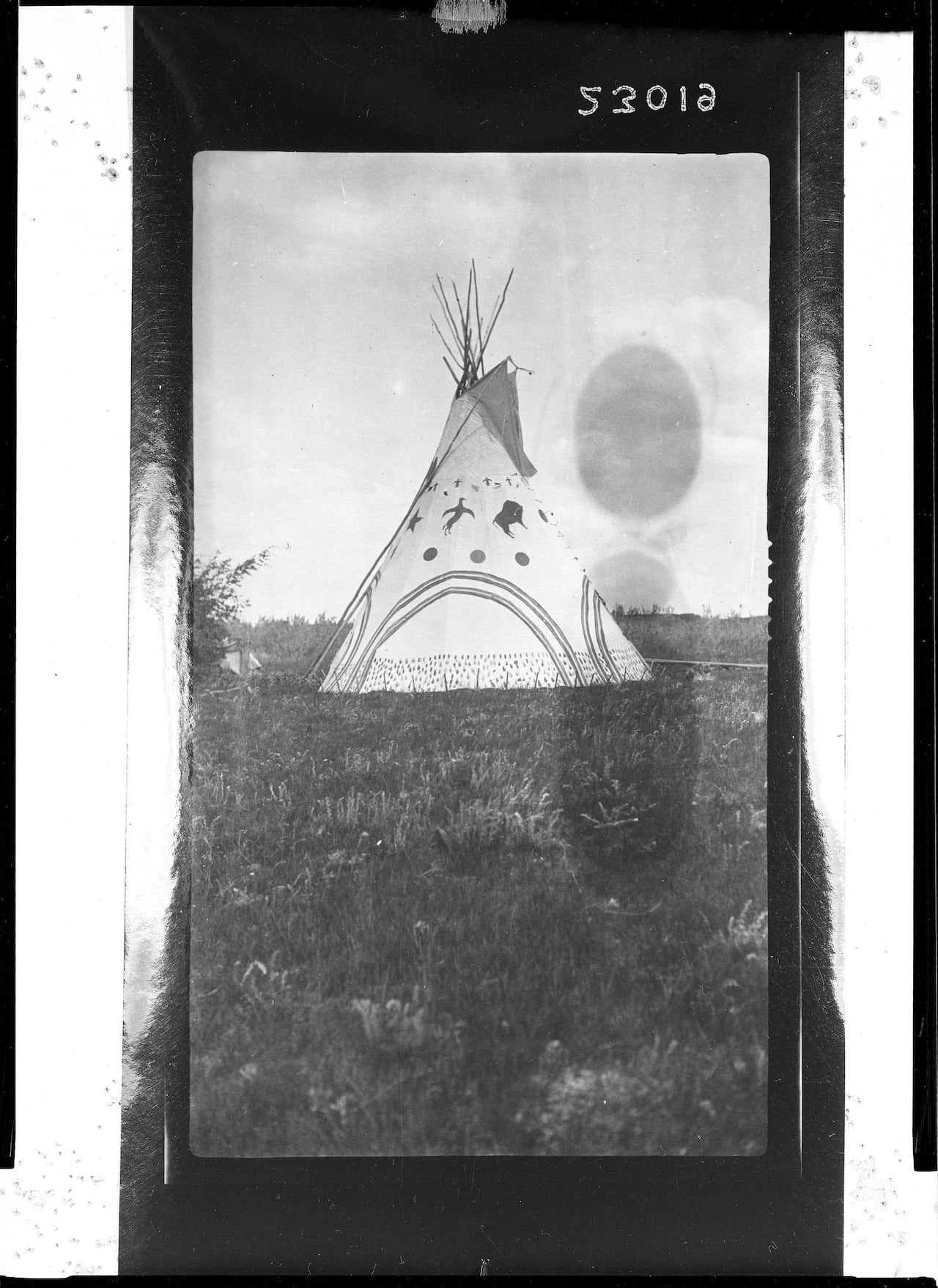
A picture of the teepee the Smithsonian Institute had on its online catalogue. (Submitted by Andrew Miller)
In an official statement, the Smithsonian admitted that some artifacts in its possession were acquired in an unethical manner. At that time, the Indian Agent served as a go-between for Indigenous owners and buyers.
In 2022, the museum implemented a shared stewardship and ethical returns policy to address some of its previous unethical actions.
“The policy recognizes that the ethical standards and best practices in collecting have evolved, and that the Smithsonian now holds items it would not have obtained had current standards been applied,” the statement indicated.
A century after its theft, the teepee is on its way back to its original community.
Dustyhorn expressed that the return would reinforce the bond between him, his family, and the entire community with his ancestor.
Plans are underway to establish a museum in Kawacatoose to showcase the teepee, although for the time being, it will be housed at the Royal Saskatchewan Museum in Regina.