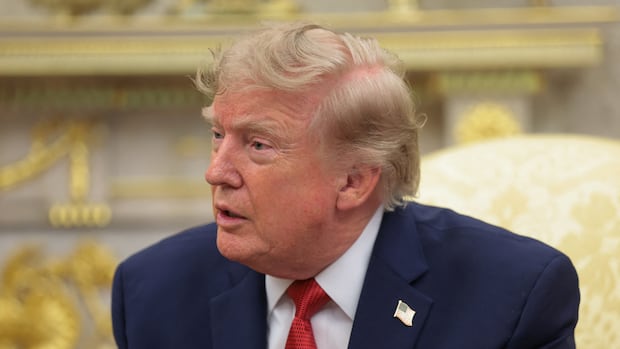
Late on Tuesday, U.S. President Donald Trump declared a three-day delay in enforcing a 50 percent tariff on a variety of Canadian products, making the announcement just under two hours before the significant tariffs were scheduled to go into effect.
In an initial social media update, the president explained that the tariffs were postponed “due to the fact that Canada and the U.S.A., pending the finalization of documents, have a DEAL!”
Subsequently, a statement from the White House indicated that the delay is “in the public interest” because Canadian negotiators “demonstrated a commitment” to address trade issues that the Trump administration had previously highlighted as the basis for imposing the tariffs.
Prime Minister Mark Carney, in his own statement an hour later, refrained from mentioning any provisional agreement and did not specify the concessions that may have been offered. He described the administration’s choice as a postponement to allow for ongoing trade discussions.
“Significant progress has been achieved, though important tasks remain,” the statement noted.
“While we continue this work, Canada is dedicated to fostering a stronger, more independent, and competitive economy domestically.”
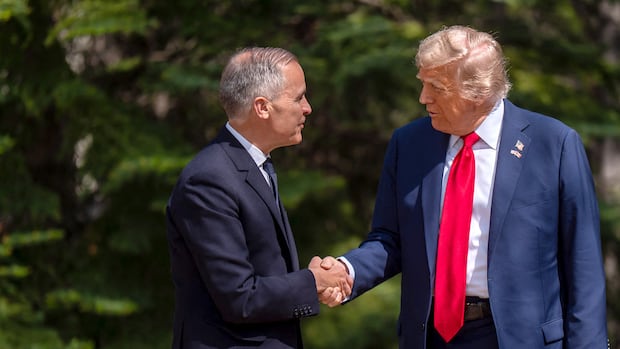
U.S. President Donald Trump has paused 50 percent tariffs on Canada, saying the two countries have reached a new trade deal that just needs to be finalized. In a statement, Prime Minister Mark Carney said ‘substantial progress has been made.’
The Trump administration’s new tariffs were originally set to commence at 12:01 a.m. ET on Wednesday. These tariffs would have affected hundreds of items valued over $28 billion, including plywood, cement, wine, and hockey sticks.
The extension provides additional time for negotiators who were hurrying to finalize an agreement before the deadline. This also offers temporary relief to businesses on both sides of the border, who feared that the tariffs would severely impact small enterprises, disrupt supply chains, and increase living costs for average families.
However, there is no assurance that Canada can avoid tariffs in the long run. Trump did not clarify whether any agreement, if finalized, would result in the permanent removal of the tariffs.
-
U.S. businessowners don’t want to leave their Canadian suppliers, but 50% tariffs might leave them no choice
-
These 3 charts show where Trump’s new tariffs could have the biggest impact
Recently, Canadian trade officials have engaged in several discussions with their U.S. counterparts in D.C., which Carney previously described as “intense” and “delicate.” The prime minister had phone conversations with Trump on Monday and earlier on Tuesday.
Following the call between Carney and Trump, Canada-U.S. Trade Minister Dominic LeBlanc reconnected with U.S. Trade Representative Jamieson Greer and Commerce Secretary Howard Lutnick in an effort to bridge the gap in their negotiating positions.
After Trump’s announcement, Greer stated that the proposed deal encompassed “comprehensive market access for all American goods, commitments for economic security, alignment in digital trade, and numerous significant provisions designed to safeguard our market and American workers, alongside our Canadian partners,” although specifics were not disclosed.
Trump hinted that a finalized agreement could revive the Keystone XL pipeline project, which was intended to transport oil from Alberta to refineries on the U.S. Gulf Coast. His social media update on Tuesday indicated that the project, canceled by the Biden administration in 2021, “may be awoken from the grave!”
Auto tariffs have been a sticking point: sources
On Tuesday, sources warned that Canada and the U.S. remained at an impasse over several key issues, including the potential tariff on Canadian automobiles entering the U.S.
CBC News has chosen not to reveal the sources’ identities as they were not authorized to publicly discuss the negotiations.
Trump had threatened to impose the 50 percent tariffs on a long list of Canadian goods as retaliation for Canada imposing tariffs on certain U.S. products, which were only enacted after Trump initiated a trade war against Canada last year.
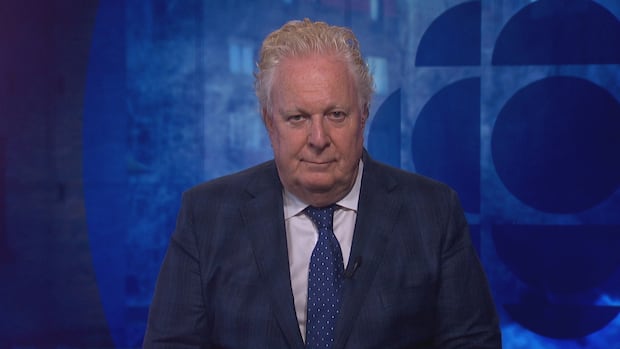
With 50 per cent tariffs set to take effect just after midnight, negotiators from Canada and the United States continue to work toward a deal. Member of the Advisory Committee on Canada-U.S Economic Relations Jean Charest joins Power & Politics to break down what the state of negotiations means for Canada.