

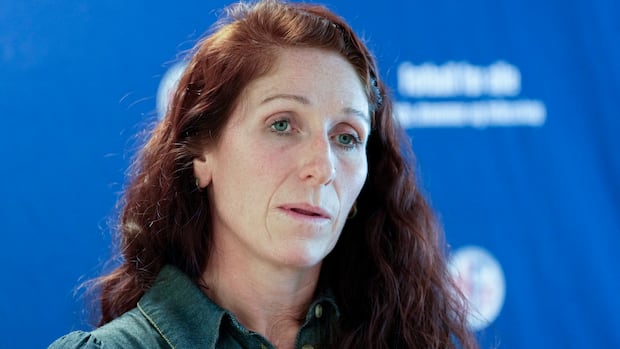

Norway soccer president Lise Klaveness declared on Tuesday that FIFA’s decision to dismiss a senior official who accused Gianni Infantino of misleading staff with his plan to sell World Cup rights was unacceptable, and she urged other leaders within the organization to resist potentially harmful directives.
The termination of FIFA’s chief operating officer Kevin Lamour occurred late Monday, just 17 days after he criticized Infantino’s $20 billion private equity initiative in a statement to the Associated Press, which subsequently led to the project’s cancellation within hours.
“He has been dismissed, and we are expected to just move forward. This is unacceptable; it’s management through fear,” Klaveness told the AP during a phone interview, praising Lamour as “the finest football administrator I have ever encountered.”
“We must also urge the FIFA leadership and administration to resist orders that clearly do not serve the interests of football,” Klaveness emphasized, particularly addressing FIFA secretary general Mattias Grafström.
Klaveness, a former international player for Norway, a judge in Oslo, and a member of UEFA’s executive committee, has continued her country’s longstanding commitment to promoting good governance in soccer.
Lamour had a long-standing professional relationship with Infantino, first as senior officials at UEFA from 2007 to 2015, then joining Infantino’s campaign team for the FIFA presidency in 2016, and moving two years ago from UEFA to manage a significant portion of FIFA’s operations in Zurich.
Infantino in crisis
Lamour’s pointed criticisms of Infantino’s leadership, paired with his reputation as one of the most trusted figures in the often opaque realm of global soccer politics, have heightened the crisis surrounding the FIFA president.
A backlash from UEFA, the Asian Football Confederation, and North American soccer organization CONCACAF was sparked by a covert proposal to sell future World Cup profits to investors led by Joshua Kushner.
An investment of $4.2 billion would have secured a 20% share in a FIFA commercial spinoff, intended to fund payments of $20 million to each of its 211 national member federations. These federations already effectively own the non-profit organization, which boasts multibillion-dollar reserves, and would have faced a mid-September deadline to accept the proposal.
In his statement on July 31, Lamour remarked that FIFA staff had been “deceived” by Infantino’s lack of transparency regarding the now-aborted sale, asserting that they “deserve better than contempt and intimidation.”
The French executive called on global soccer leaders to “make the right decisions” and concluded his statement with: “If that means I lose my job, then so be it. I will accept and respect that decision. At least I will sleep well tonight.”
Fired, not resigned
“This is a case of firing, not resignation,” Klaveness commented regarding Lamour’s departure, implying it was orchestrated by Grafström “under obvious pressure from the president.”
FIFA released a statement expressing gratitude for Lamour’s two years of service and wished him success in future endeavors.
“His statement was crucial in terminating the project,” Klaveness remarked about Lamour’s intervention. “He articulated what was evident and it was vital for someone on the inside to disclose the truth, making it clear that it was not FIFA as a whole, but rather one individual.”
Infantino convened a meeting with senior management, excluding Lamour, in Rabat, Morocco. Following that August 5 meeting, FIFA issued a statement apologizing for the missteps and noted that the managers present “reaffirmed their full support” for Infantino’s presidency.
“We received reports from Morocco; we understand it is a situation of management by fear,” Klaveness stated. “This is not in the best interest of football.”
Prior to the uproar regarding Infantino’s “FIFA Forward Enterprise” proposal, he appeared poised to be reelected unopposed next year in Morocco. The deadline for potential challengers to enter the race is November 18.