


Many people give up on exercise because their knees complain. The worry is understandable: nobody wants to make a sore joint worse. But complete rest is not always the answer. For many people, gentle, regular movement supports joint health, strengthens the muscles around the knee and helps manage body weight, which in turn reduces load on the joints.
A treadmill can be a useful tool here because you control the surface, the speed and the slope. This guide explains how to use one thoughtfully.
Important: if you have persistent knee pain, swelling, a diagnosed condition or a history of injury, see a doctor or physiotherapist before starting. This article offers general information, not medical advice.
Why a treadmill can be knee-friendly
- Cushioned deck: many treadmills absorb part of the impact of each step. This is often softer than concrete or tiled floors.
- Even surface: no potholes, kerbs or uneven footpaths to cause a twist or stumble.
- Adjustable pace: you can walk as slowly as you need.
- Easy incline control: you can fine-tune effort without pounding the joints.
- Climate control: you exercise in comfort, which means less stiffness from cold and less fatigue from heat.
Choose features that protect your joints
When looking at machines, pay attention to:
- Shock absorption system: a good deck cushions impact.
- Belt width and length: a roomier belt lets you walk naturally without shortening your stride.
- Motor smoothness: a stable machine runs without jerks.
- Handrails: sturdy rails offer light balance support.
- Low starting speed: you should be able to begin very slowly.
Browsing a range of treadmills with good cushioning will help you compare shock-absorption features and belt sizes before you commit.
Set up your body correctly
Shoes: wear supportive athletic shoes with good cushioning. Old, flat or worn-out shoes lose their shock absorption.
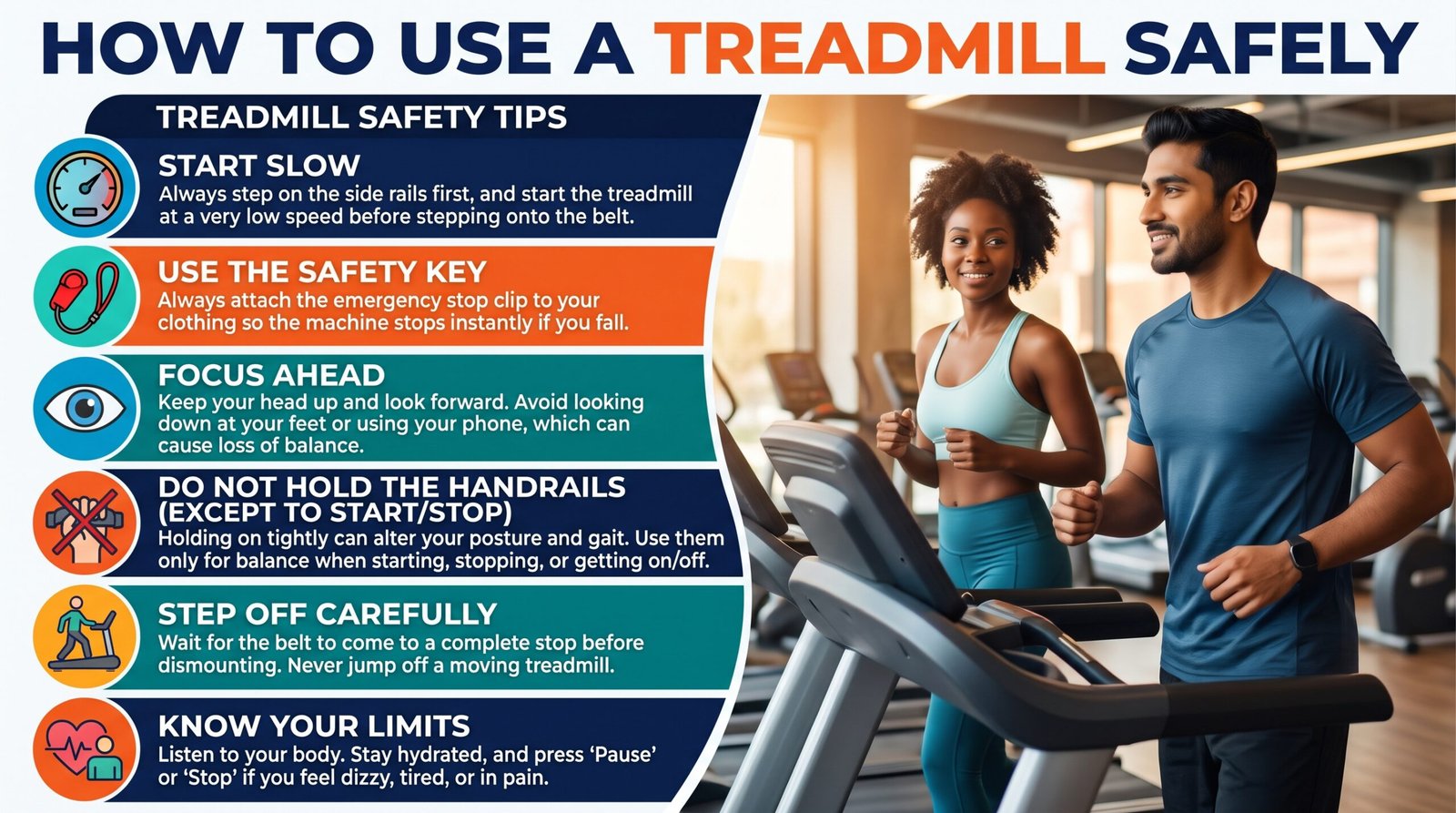
Posture: keep your head up, shoulders relaxed and core lightly engaged. Look ahead rather than down.
Stride: take natural, medium-length steps. Overstriding sends more force through the knee.
Handrails: use them lightly for balance only. Leaning heavily changes your gait.
A gentle four-week plan
| Week | Frequency | Session |
| 1 | 3 days | 10–15 minutes of slow, flat walking |
| 2 | 3–4 days | 15–20 minutes, slightly faster, still flat |
| 3 | 4 days | 20–25 minutes, add 1–2% incline for a few minutes |
| 4 | 4 days | 25–30 minutes, comfortable pace with small incline blocks |
Always warm up with 3 to 5 minutes of very easy walking and cool down the same way.
Pain versus discomfort
Mild muscle tiredness is normal when starting. Stop and rest if you notice:
- Sharp or stabbing pain
- Pain that gets worse as you continue
- Swelling after exercise
- A feeling of the knee giving way or locking
If symptoms persist, get professional advice before continuing.
Strengthen the support team
Strong muscles around the knee take stress off the joint. Alongside treadmill walking, ask a physiotherapist about gentle exercises for the thighs, hips and calves. Even simple movements, done correctly, can make a noticeable difference over time.
Things to avoid
- Sudden jumps in speed or duration
- Running on days when your knees feel sore
- Steep inclines early on
- Walking in worn-out shoes
- Ignoring warning signals because of a goal
Frequently asked questions
Is walking on a treadmill good for knee pain? For many people, gentle walking helps. Individual cases differ, so check with your doctor.
Should I use an incline? Start flat. Small inclines can be added gradually, but steep slopes may increase knee load for some people.
How long should I walk each day? Begin with 10 to 15 minutes and increase slowly as comfort allows.
Is a treadmill better than walking outside for knees? It can be, thanks to cushioning and even footing. Soft outdoor surfaces such as tracks and grass are also good.
Final thoughts
Sensitive knees do not mean the end of cardio. With the right equipment, shoes, pace and patience, many people continue to enjoy regular exercise. Move gently, progress slowly and let professional advice guide you.
Health note: this article is for general information only and is not medical advice.