

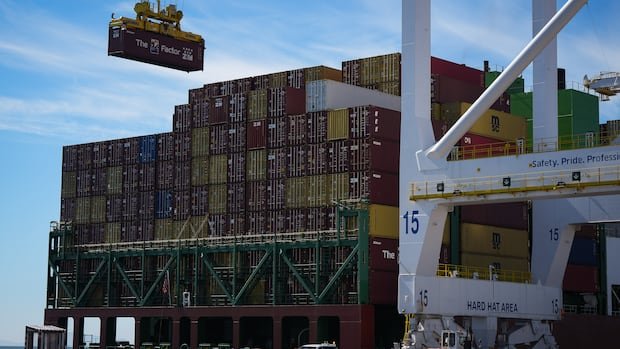

With the clock ticking for Canada to finalize a trade agreement with the United States, numerous Canadian businesses are anxious, anticipating a potential loss of up to half of their sales if new tariffs are imposed. The impending U.S. tariffs, scheduled to come into effect on Wednesday, would impact a range of Canadian products, including electronics, dairy, alcohol, and wood, among others.
Negotiations are reaching a critical juncture, with Canadian officials likely to meet U.S. Trade Representative Jamieson Greer before Prime Minister Mark Carney and U.S. President Donald Trump engage in discussions ahead of the tariff deadline. The final decision on any deal rests with President Trump, as emphasized by America’s chief trade negotiator.
For some Canadian companies, the proposed tariffs pose a significant threat beyond just higher prices for American customers. Shipping goods across the border may no longer be financially viable. Todd Stafford, president of Northern Cables based in Brockville, Ontario, expressed concerns as half of their sales depend on U.S. buyers. The company specializes in manufacturing copper and aluminum power cables for commercial and industrial purposes.
Stafford highlighted the potential immediate loss of all U.S. business if the 50% tariffs are implemented, emphasizing the impact on their operations and the risk of layoffs. Despite avoiding layoffs for over two decades, the company faces uncertainties exacerbated by the tariffs, including challenges in the domestic market and competition from cheaper Chinese products.
The shield provided by the Canada-U.S.-Mexico Agreement (CUSMA) has exempted the majority of cross-border trade between Canada and the U.S. from previous tariffs. However, the new tariffs set to take effect would affect approximately 5% of Canada’s overall trade with the U.S., impacting various exports such as hockey sticks, specific flowers, and antiques.
Jasmin Guénette, the vice president of national affairs at the Canadian Federation of Independent Business (CFIB), highlighted the significant concerns among business owners facing potential revenue losses. The uncertainty surrounding the tariffs has prompted businesses like CindyLouWho2, a Calgary-based handmade jewelry company, to halt U.S. shipping and adjust prices to mitigate the impact.
As businesses brace for the repercussions of the looming tariffs, some have already felt the effects. Randy Williams, director of sales and marketing at Monterey Textiles, emphasized the challenges faced by businesses on both sides of the border, with layoffs and disrupted orders already occurring due to the tariff threat.
In Alberta, beekeeper Lorne Prins of Gull Lake Honey shared concerns about the impact of potential tariffs on honey sales, highlighting the rush to export before the deadline and the risk of surplus honey affecting prices. Prins emphasized the importance of supporting local businesses amid the uncertainty.
As the deadline approaches, Canadian businesses across various sectors remain on edge, navigating the evolving trade landscape and preparing for potential disruptions in their operations.