

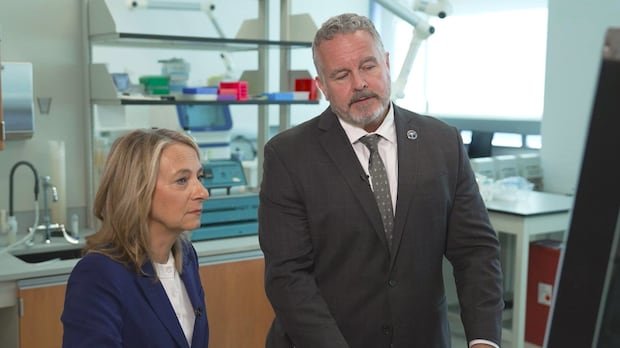

Inside a laboratory located in Manhattan, forensic experts in white lab attire are diligently continuing their efforts to fulfill a promise made a quarter-century ago. They are currently isolating DNA from numerous human remains retrieved after the World Trade Center terrorist attacks, aiming to match them with samples provided by family members from personal items like toothbrushes and razors.
While the commitment remains steadfast, the methods employed to extract DNA from the remains have evolved, incorporating advancements in forensic investigative techniques that were not available in 2001. Mark Desire, the assistant director of forensic biology at the New York City Office of the Chief Medical Examiner, emphasized the emotional significance of identifying a loved one after persistent scientific efforts.
Approximately 40% of the 2,753 individuals who perished at Ground Zero remain unidentified, including around 10 of the 24 Canadian victims. Recently, the lab achieved a breakthrough by successfully identifying previously unknown remains using a novel technique, with the family opting to keep the individual’s identity confidential.
This innovative approach combines DNA tests with genetic genealogy, leveraging family tree research conducted by the New York City Police Department. Dr. Jason Graham, the Chief Medical Examiner in New York, hailed this as a pioneering development with the potential for numerous additional identifications.
For Monica Iken-Murphy, whose husband Michael Iken was a victim of the south tower collapse, this breakthrough offers renewed hope in the quest for closure. She expressed her longing for a tangible connection to her husband, beyond the absence of physical artifacts typically associated with the victims.
Desire, reflecting on his experiences as a rookie scientist during the 9/11 events, recalled the challenges faced in preserving evidence amidst the chaos. The intense efforts to uphold the promise of identifying all victims have been a driving force for him, despite enduring personal hardships during the tragic events.
Over the years, the lab has faced significant challenges in excavating and preserving the remains, given the harsh conditions at Ground Zero. The intricate process involved sifting through debris at Staten Island’s landfill site to salvage and safeguard any recoverable remains, amidst numerous factors that could compromise DNA integrity.
While traditional methods like fingerprinting and dental records were initially used for victim identification, the scientific community has made significant strides in extracting DNA from bone fragments. However, the complexity of bone as a material poses unique challenges, requiring meticulous procedures to obtain viable DNA samples.
The introduction of a new technique that combines DNA sequencing with genealogical research marks a significant advancement in the identification process. By utilizing outside labs to generate full genomic sequences from unidentified remains, followed by family tree searches by the NYPD, the potential for more matches and identifications is greatly enhanced.
The Chief Medical Examiner’s office encourages families to provide DNA samples to facilitate more matches and identifications, emphasizing the importance of collective efforts in this ongoing endeavor. Despite the scientific progress, families facing the prospect of potential matches for their lost loved ones often grapple with the emotional toll of seeking closure.
Numerous families, like Abigail Carter, have found solace in their own ways of honoring their loved ones, transcending the need for physical remains. Carter’s poignant recollection of her husband’s memory at their daughter’s wedding exemplifies the enduring impact of personal tributes and gestures in commemorating lost lives.
Ultimately, the journey to identify and honor the victims of 9/11 continues to be a poignant testament to resilience, scientific progress, and the enduring legacy of remembrance.