

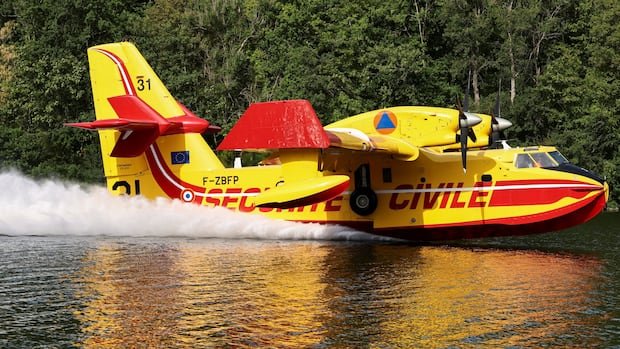

As wildfires rage in Canada, the United States, and Europe, there is mounting pressure on the manufacturer of the Canadair “Super Scooper” water bombers to ramp up production. Calgary-based De Havilland has decided to restart production of the Canadair after acquiring the program, which was previously handled by Bombardier until 2015.
The iconic Canadair aircraft are meticulously crafted by hand in Calgary, with components sourced from across Canada. The reinvigorated production line, announced in 2022, is making progress with the first two aircraft set to be completed and delivered by early 2028.
Given the current shortages and aging fleets, Canadian premiers and European leaders are eager to acquire these aircraft. The Canadair planes, initially introduced in the 1960s for battling wildfires in the Canadian wilderness, are specifically tailored for firefighting, unlike other aircraft that are retrofitted for water-carrying purposes.
The latest iteration of the Super Scooper will closely resemble its predecessors, featuring a 30-meter wingspan, a 6,100-liter water tank, and the signature yellow and red exterior. Political figures in France and Spain have faced criticism for inadequate operational Canadairs, impacting their ability to combat wildfires amid extreme weather conditions.
The high demand for these aircraft has prompted discussions about potentially establishing a second production line to meet the needs of various regions. De Havilland, known for its diverse aircraft portfolio and employing around 4,000 individuals mainly in Calgary, Ontario, and Victoria, aims to produce up to 10 water bombers per year initially, with plans to double the output with a second line.
With existing orders for 38 water bombers, the delivery timeline for new orders extends to 2032-2033 due to the intricate manufacturing process involving tens of thousands of parts, with 80% sourced locally. The exact cost of a Canadair is estimated at around $80 million per aircraft.
The looming threat of foreign competitors entering the firefighting aircraft market underscores the importance of meeting the global demand for water bombers. As countries worldwide face escalating wildfire challenges, the urgency for enhanced firefighting capabilities is pronounced.
In response to the escalating demand for water bombers and the potential influx of foreign competitors, De Havilland and government authorities are contemplating strategies to bolster domestic manufacturing and maintain Canada’s leadership in firefighting aircraft technology.
As governments focus on fortifying national firefighting capabilities, the Senate report recommends establishing a modern national fleet of firefighting aircraft. While aircraft play a crucial role in managing wildfires by impeding their spread and aiding ground crews, they are just one component in a broader firefighting strategy that includes prevention and mitigation efforts.
The commitment to enhancing wildfire response capabilities and collaboration among federal, provincial, and territorial entities is crucial in effectively addressing the evolving challenges posed by intensifying wildfire seasons.