

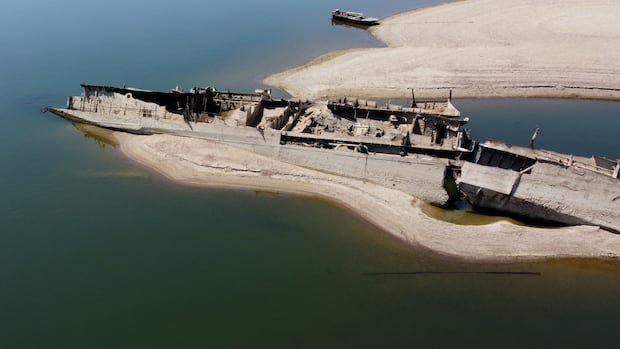

Nazi German warships that were intentionally sunk in the Danube River during World War II are resurfacing due to decreasing water levels, a visible indication of the severe heat and drought impacting Europe this summer. The fifth heatwave since May is forecasted to bring scorching temperatures to western Europe, with regions in Spain, France, and Italy nearing 40 degrees Celsius before temperatures rise further in central and northern Europe.
The Copernicus climate monitoring service of the European Union confirmed that June and July marked the hottest months on record in western Europe, leading to an estimated 25,000 heat-related deaths. The relentless heat has fueled devastating wildfires and caused water levels in significant waterways like the Danube to hit record lows.
Climate experts emphasize that the emergence of the sunken warships is a stark reminder of the broader issue at hand: climate change driven by fossil fuel emissions is escalating heatwaves and droughts, impacting wildfires, agriculture, shipping, and energy infrastructure across Europe. Scientists warn of worsening conditions if greenhouse gas emissions continue at current rates.
The drying Danube has revealed historical artifacts such as a German military motorcycle in Hungary, an unexploded British bomb in Slovakia, and potential ancient mammoth remains in Bulgaria. This unprecedented situation has raised urgent concerns for countries along the Danube, affecting vital activities such as crop irrigation and nuclear power plant operations.
As temperatures soar above average levels, experts point out the significant impact of climate change on heat extremes and droughts, emphasizing the reinforcing relationship between the two. The situation in Europe serves as a clear example of how global heating intensifies extreme weather events, with severe consequences for ecosystems and societies.
Looking ahead, experts predict even higher global temperatures in the coming years, exacerbated by climate change and potential future weather patterns. The current challenges faced by Europe due to heatwaves and water scarcity underscore the urgent need for proactive measures to protect natural resources and combat climate change effectively.