

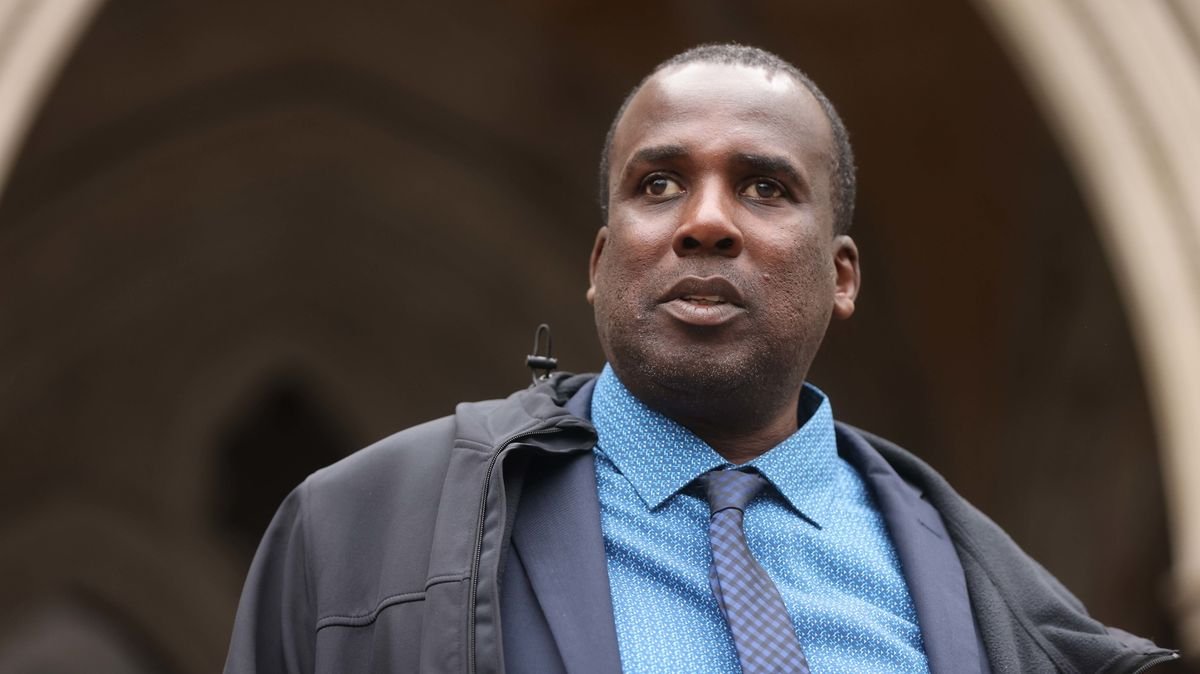

A man who suffered a wrongful conviction is planning to take legal action against the police for allegedly coercing him into falsely admitting to a murder. Last year, the Court of Appeal deemed the murder conviction of Oliver Campbell, a man with learning difficulties, unsafe.
Oliver Campbell, now 55, was wrongly imprisoned for life for the shooting of Baldev Hoondle during a failed robbery in Hackney in 1990. Despite his conviction being overturned after 11 years in prison and two decades on parole, he has not received any compensation.
His legal team is pursuing a civil lawsuit against the Metropolitan Police, claiming they exploited Campbell’s condition to pressure him into a false confession. Solicitor Glyn Maddocks KC stated that it will be a challenging battle as the police are likely to contest the claim.
Due to a change in the law in 2014, individuals must now prove their innocence beyond a reasonable doubt to seek compensation, making it exceptionally difficult without DNA evidence. Oliver’s representative, Solicitor Toby Wilton, is advocating for a fairer system, expressing concerns about the hurdles faced by victims of miscarriages of justice like Campbell.
Barrister Michael Birnbaum KC highlighted the need for legal reforms to allow individuals like Campbell, whose convictions were overturned based on new evidence, to claim compensation. Although the allegations of police manipulation were dismissed, the judge acknowledged the impact on the victim’s family.
Despite the challenges, Campbell, who has been striving for justice for 35 years, is rebuilding his life post-prison. He is now employed at a coffee shop, pursuing his passion for music festivals, and no longer under constant probation surveillance. However, he remains frustrated by the lack of compensation for the years lost behind bars.
The Metropolitan Police defended their handling of the 1990 murder case, emphasizing that Campbell had declined legal support despite being deemed fit for questioning after a medical evaluation. They highlighted the adherence to Codes of Practice ensuring legal assistance and appropriate adult presence during interviews.
In conclusion, the case of Oliver Campbell sheds light on the complexities of seeking justice after a wrongful conviction, underscoring the need for a more equitable compensation system for exonerees.