

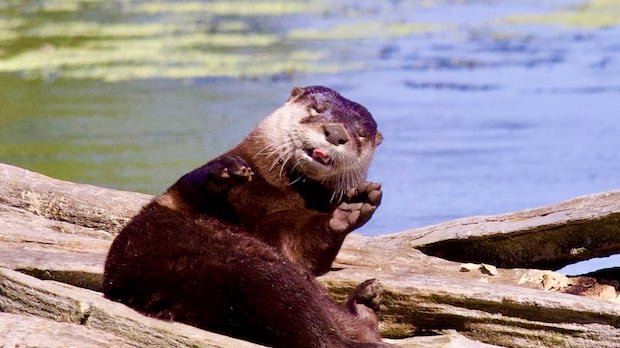

Wildlife enthusiast Terry Chettle captured a fascinating encounter between a green heron and a river otter at Grimsby Wetlands in early August, which took both him and the bird by surprise. Chettle, a resident of Beamsville, Ontario, expressed his astonishment at the otter’s presence, as they are not commonly seen in the area. Seizing the opportunity, Chettle snapped a photo of the otter as it moved to a log to groom itself, putting on a playful display by sticking out its tongue and waving.
During the same outing, Bruce and Laurie Mackenzie, who were exploring the wetland, crossed paths with Chettle, who pointed out the rare otter sighting. Bruce Mackenzie acknowledged the rarity of the find, stating that the August 3 sighting was possibly the first occurrence near the wetlands in recent memory, with no subsequent sightings reported by anyone. The wetlands, formerly a sewage storage area for the Niagara Region, are now managed by the Hamilton Naturalists’ Club, covering approximately 12 hectares along Lake Ontario’s South Shore. Mackenzie, involved with the naturalists club as the wetlands’ project manager, described the otter sighting as a positive indicator of habitat restoration and water quality improvements, highlighting previous rare species sightings like the threatened least bitterns in the wetlands.
Otters, considered a conservation success story, have been making a remarkable comeback in the Golden Horseshoe region, according to Laura Timms, a program manager at Credit Valley Conservation. The conservation authority for the Credit River watershed, which encompasses parts of Mississauga and Peel Region, reported a resurgence of river otters in the area, contrasting with a decline in the 1800s due to hunting, pollution, and habitat destruction. Timms emphasized the importance of ongoing efforts to restore and protect habitats for various species to thrive, citing wetlands as critical ecosystems supporting biodiversity, carbon storage, and flood prevention.
River otters, known to grow up to 1.4 meters in length and weigh between five to 14 kilograms, are carnivorous mammals that inhabit rivers, lakes, and creeks, where they feed on fish, clams, insects, and other aquatic creatures. Timms stressed the need for continued conservation actions to address challenges faced by other species and habitats, underscoring the imperative of preserving and enhancing biodiversity for the well-being of all wildlife.