

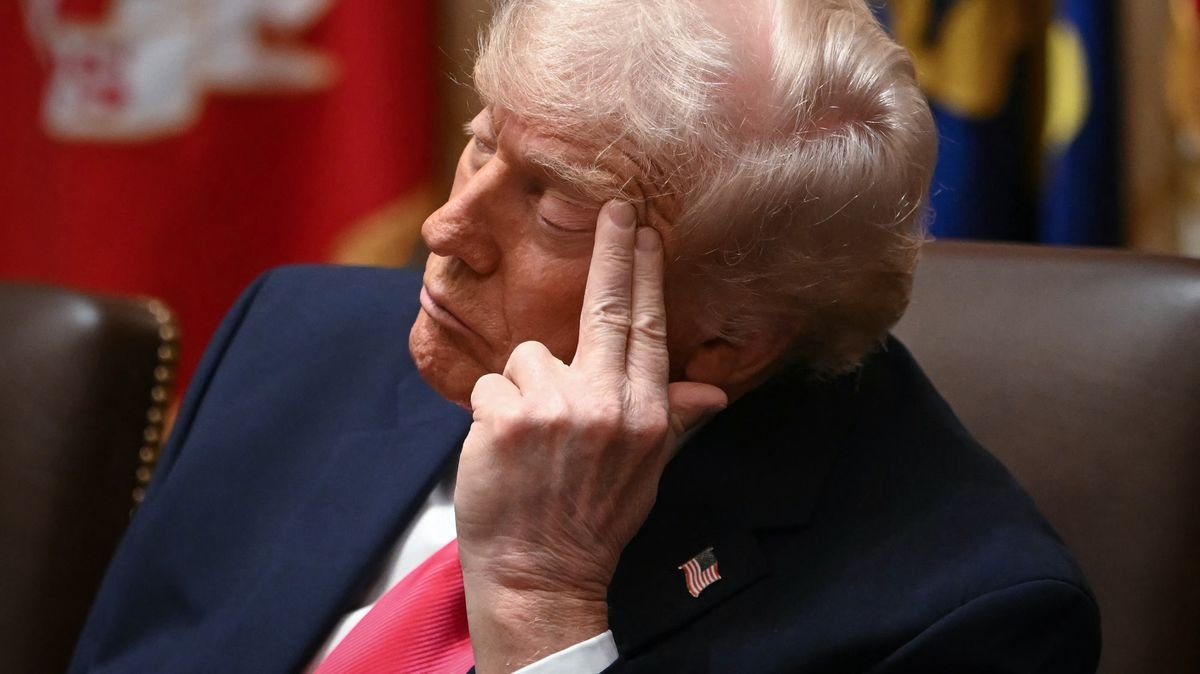

President Donald Trump continues to draw attention to his health amid ongoing discussions. As one of the oldest individuals to hold the presidential office, scrutiny over his well-being is not unexpected, particularly considering the circumstances of the previous oldest president’s departure due to health concerns.
In recent social media posts, Trump has engaged in disputes with foreign entities and has shown hesitance towards implementing tariffs. This behavior indicates a lack of significant changes or resolutions in his approach this year compared to the previous year.
In an attempt to address health-related apprehensions, Trump participated in an interview with the Wall Street Journal. However, instead of reassuring the public, the interview seemed to exacerbate concerns. Details emerged indicating that Trump underwent a CT scan, opted for compression socks for leg swelling but discontinued their use, and revealed an excessive aspirin intake, citing superstition as a reason for not reducing the dosage.
Furthermore, Trump dismissed claims of falling asleep during meetings, attributing closed eyes in photographs to mere blinking. Amidst frustration over the ongoing health discourse, Trump expressed annoyance during a spontaneous call to the newspaper ahead of a scheduled health-related story.
Additionally, Trump disclosed incidents of sustaining a hand injury from a high five and resorting to makeup to conceal bruises from forceful handshakes. Reports from the Wall Street Journal resurfaced claims of Trump’s dietary habits during campaigning, including consuming multiple fast-food items in a single sitting.
On the international front, tensions between Trump and Iranian officials escalated amidst economic protests in Iran. Trump issued warnings about potential U.S. intervention if violence against peaceful protesters persists, while Iranian officials criticized perceived external influences on the demonstrations.
In domestic politics, Trump faced public criticism from newly inaugurated New York Mayor Zohran Mamdani, who emphasized governance priorities that seemingly disregarded the President. Trump’s decision to delay planned tariff increases on certain furniture items further exemplified his wavering approach to policy implementation.
Overall, Trump’s actions and statements in the early days of this year suggest a continuation of familiar patterns from the preceding year, with ongoing controversies and responses shaping his presidency.