


UPDATE:
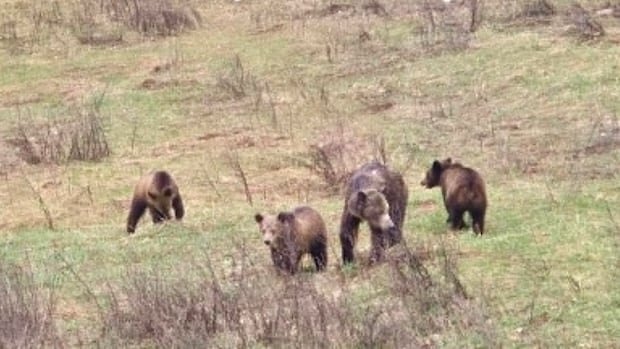
- The B.C. Conservation Officer Service announced on August 14 that the mother grizzly bear was euthanized due to public safety concerns after displaying food-conditioned behavior and losing fear of humans.
- The remaining two yearlings were relocated to an undisclosed location for ongoing monitoring.
- CBC News was informed that there was no availability for an interview with the service.
A demonstration occurred in Nelson, B.C., on Thursday to express disapproval of the B.C. Conservation Officer Service’s decision to euthanize a young grizzly bear.
The bear belonged to one of two grizzly families whose movements in and around Nelson have garnered widespread attention.
Katie Graves, founder of the Ursa Project Society, described the rally as emotional, with attendees shedding tears and offering support.
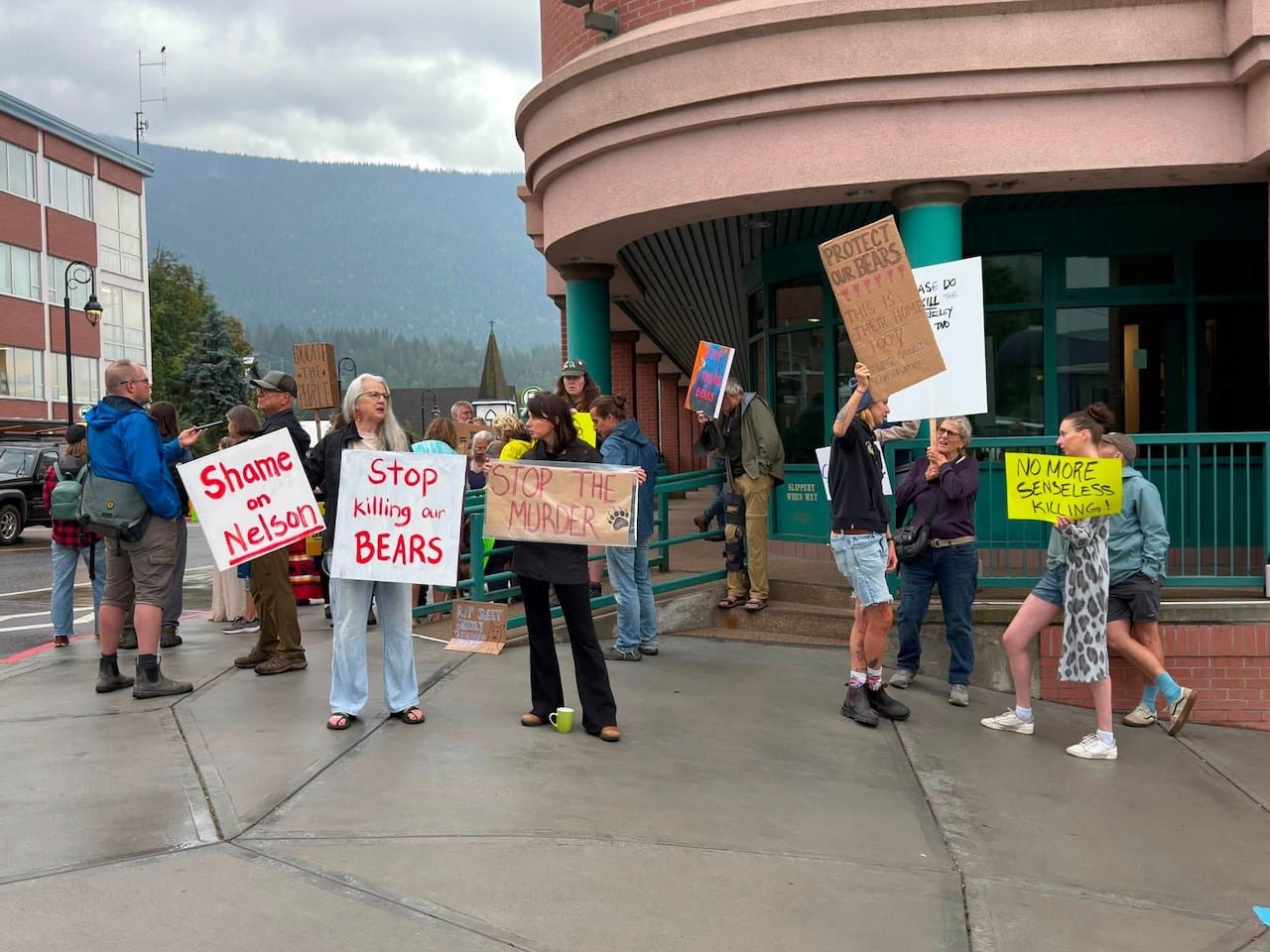
Graves argued against the euthanization of the yearling grizzly, emphasizing its mobility, ability to keep pace with its family, and capacity to feed itself.
She highlighted that despite a leg issue, the bear was active and adapting, similar to other bears living with physical challenges.
In a statement released by the B.C. Conservation Officer Service (BCCOS) on Wednesday, it was stated that the bear’s age, injury, and history of conflicts deemed it unsuitable for rehabilitation or relocation, without specifying the nature of the conflicts.
The BCCOS expressed regret over the necessity of euthanizing injured, sick, or conflict-prone bears, underscoring the weight of such decisions.
Graves mentioned that the mother bear had previously been relocated after bringing cubs to the area in 2023, only to return shortly thereafter.
The Conservation Officer Service has not provided updates on the status of the other grizzlies — a sow and two yearlings — but assured that each captured bear would undergo assessment for determining the next course of action.
The incident has triggered numerous discussions on social media platforms within the community, predominantly critical of the decision to euthanize the grizzly bear.
Many individuals acknowledged the efforts of conservation officers to safeguard the public while expressing the importance of better waste management and measures to deter bears.
Wildlife biologist Clayton Lamb emphasized the need for robust policies at the provincial and municipal levels to minimize attractants and prevent further bear casualties.
Lamb stressed that once bears become habituated to human sources of food, rehabilitation and relocation become increasingly challenging, particularly if the bears are comfortable in urban settings.
He underscored that managing attractants is crucial to averting future conflicts and ensuring the preservation of grizzly bear populations.
The City of Nelson affirmed its commitment to conflict prevention and wildlife conservation through initiatives such as installing bear-resistant garbage bins and conducting educational programs for the public.
The city’s bylaw services are actively enforcing waste management regulations and addressing issues related to unsecured garbage and wildlife attractants as necessary.