

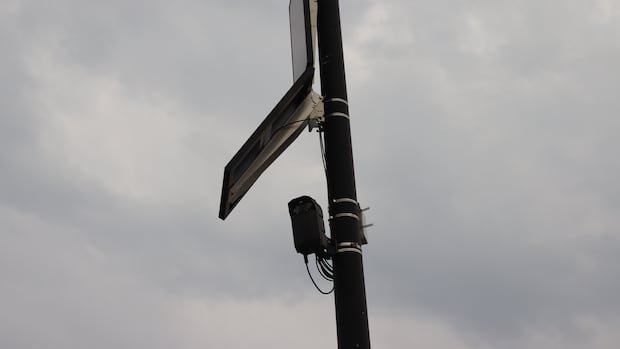

Montreal authorities have been expanding their arsenal of AI-driven technology to monitor vehicles and individuals throughout the city, sparking concerns about transparency and privacy. A sophisticated camera capable of scanning and identifying vehicles was recently spotted on a lamppost in Montreal’s Rivière-des-Prairies neighborhood by a reporter from Radio-Canada. Manufactured by Montreal-based company Genetec, the camera, known as Cloudrunner CR-H2, was promptly removed after Radio-Canada’s report.
Unlike the controversial Flock Safety cameras in the United States, the Genetec system not only reads license plates but also records specific vehicle details such as color, make, and model. While Flock cameras share data in a central database accessible to various law enforcement agencies, Genetec’s approach involves managing the information internally. The Montreal police, or Service de police de la Ville de Montréal (SPVM), clarified that images captured by the camera are solely accessed by investigators handling relevant cases.
According to SPVM spokesperson Marc-Antoine Bélanger, the camera’s removal was a strategic move to safeguard ongoing investigations. The SPVM maintains secrecy around its technological tools to prevent interference with complex probes. However, privacy advocates argue that the rollout of new technology lacks transparency.
Dominique Peschard, a representative from the Ligue des droits et libertés, emphasized the importance of informing the public about the tools being employed by law enforcement while ensuring procedural integrity. Peschard stressed the need for oversight to prevent potential privacy violations.
The deployment of Cloudrunner cameras is part of the SPVM’s broader adoption of AI technology, including the iMotion ROC AI software from Rank One Computing. Although the software assists investigators in analyzing video footage, the SPVM denies using its facial recognition or biometric features. The system operates offline within a closed network and processes video feeds from urban security cameras and private surveillance footage collected with consent or a warrant.
An internal privacy impact assessment by the SPVM highlights civil liberties risks associated with the technology, such as unwarranted investigations and discrimination based on visible characteristics. The assessment underscores the software’s configuration to search for objects rather than identifiable traits to minimize discriminatory outcomes.
The SPVM’s acknowledgment of the Cloudrunner camera usage followed initial confusion on the part of Montreal Police Chief Fady Dagher. The chief later clarified that the device was employed to combat armed violence and vehicle thefts. Despite concerns raised by Peschard regarding the chief’s awareness of the technology, public records reveal Montreal’s procurement of Cloudrunner units from Genetec.
Andrew Elvish, Genetec’s vice president, emphasized the technology’s privacy-respecting design and data handling protocols. He highlighted the balance between privacy and community safety in deploying such tools. The City of Montreal stated that it did not install the Cloudrunner camera and redirected inquiries about its deployment to the SPVM.
In conclusion, the use of advanced surveillance tools like Cloudrunner cameras prompts discussions about privacy protection and oversight in law enforcement practices. The evolving landscape of AI-driven technology necessitates careful consideration of civil liberties and data privacy concerns.