


The Canadian Food Inspection Agency (CFIA) has confirmed the presence of an invasive insect that threatens grapevines and various crops and trees, marking its first detection in Canada.
This initial finding occurred in Windsor.
Residents of Windsor have previously reported sightings of the spotted lanternfly, as noted by a non-profit organization dedicated to combating invasive species.
However, this is the first instance of it being identified through an agency survey, according to the Invasive Species Centre.
“The spotted lanternfly is notorious for damaging and destroying grapevines, which poses a significant threat to the grape and wine sectors,” the centre stated in a news release on Thursday.
“This pest may also adversely affect other agricultural producers, as well as the horticultural and forestry sectors, in addition to residential gardens and community parks. If left unchecked, the spotted lanternfly could lead to extensive economic, ecological, and social repercussions.”
Originating from Southeast Asia, the spotted lanternfly was first observed in North America in Pennsylvania back in 2014, as reported by the centre.
This insect is capable of feeding on the sap of over 100 different plant varieties.
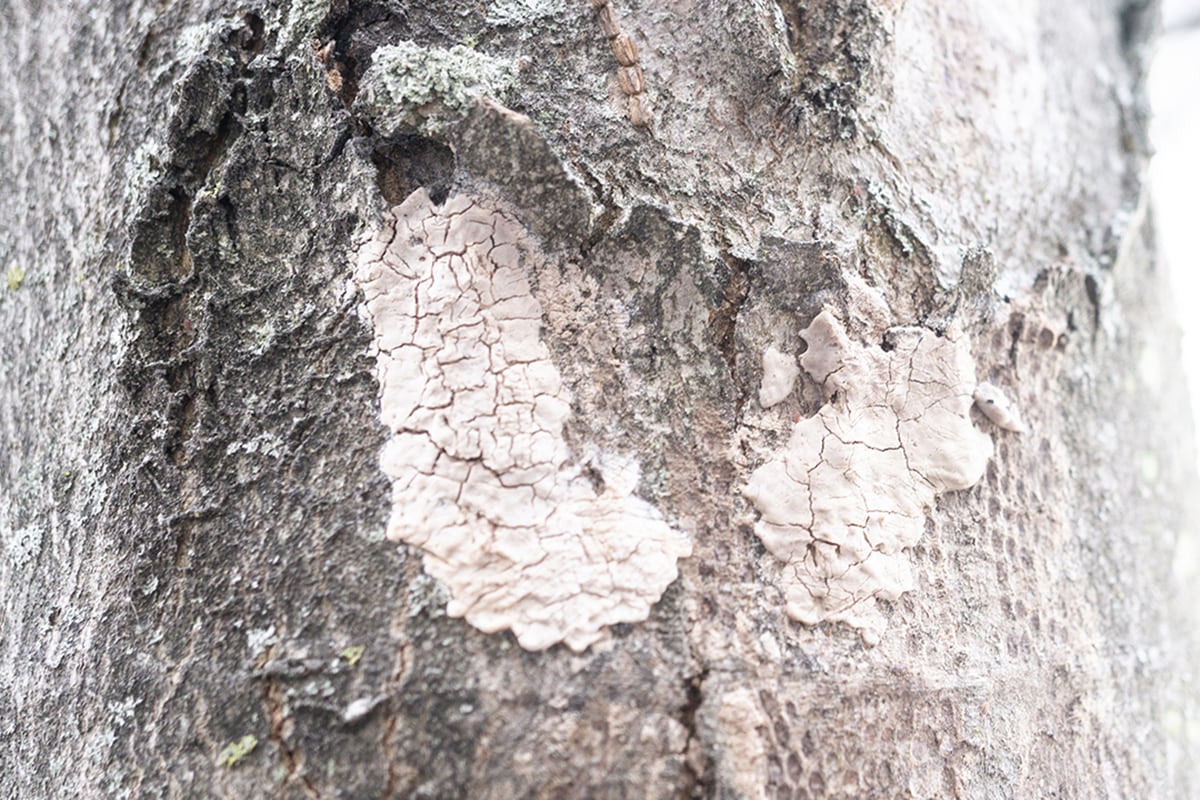
Egg masses of the spotted lanternfly. (Canadian Food Inspection Agency)
The centre encourages the public to familiarize themselves with identifying this insect.
If individuals encounter a lanternfly or its eggs, they are urged to take a photograph, place the insect or eggs in a resealable plastic bag or container, and report it to the CFIA.
“All Canadians are urged to report any suspected sightings of the spotted lanternfly to the Canadian Food Inspection Agency (CFIA) without delay,” the release emphasized.
“A well-documented report should include a precise location and images of the insect. The CFIA will respond to reports of the spotted lanternfly and take necessary actions, which may entail site inspections and insect collection.”
How to identify a spotted lanternfly
The Invasive Species Centre, alongside the CFIA, has shared several guidelines for recognizing these insects.
Adults:
- Approximately 25 mm long and 12 mm wide.
- The front wings are light brown or grey with black spots towards the front and dark speckled bands near the back.
- The back wings are red with black spots near the front and white and black bands at the back.
- The abdomen is yellow with horizontal black stripes.
- They often gather in large groups on trees, grapevines, and other plants.
- Visible from summer until they perish in late fall or early winter.
- Most active during September and October, when they mate and lay eggs.
Nymphs:
- Young nymphs are black with white spots.
- Older nymphs are red with black and white spots.
- They can be seen in spring and summer.
- Tend to form swarms and climb plants and trees to feed.
Eggs:
- Egg masses resemble grey patches of mud on host trees and other hard surfaces outdoors.
- As they age, the grey coating fades, resembling seeds arranged in vertical rows of four to seven.
- Egg masses are about 25 mm long.
- Typically noticeable starting in September and lasting through winter until they hatch in the spring.
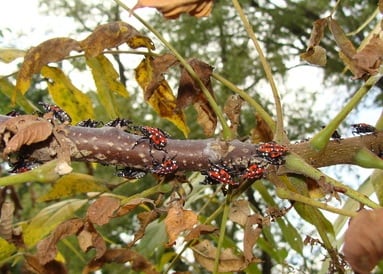
Spotted lanternfly nymphs cluster together on a tree. The insects can be recognized by their bright red underwing pattern. (Eric R. Day/Bugwood.org)
The insect produces a clear, sticky substance known as honeydew, which can build up at the base of a host tree, potentially encouraging the growth of sooty mold, according to the centre.
This substance can also attract bees and wasps.
Reducing the spread
The Invasive Species Centre has offered the following recommendations for minimizing the spread of the lanternfly:
- When in areas known to have spotted lanternfly infestations, inspect your vehicle and any outdoor items for egg masses, nymphs, or adults.
- Consider taking your vehicle through a high-pressure car wash.
- Avoid moving firewood—purchase and burn firewood locally.