

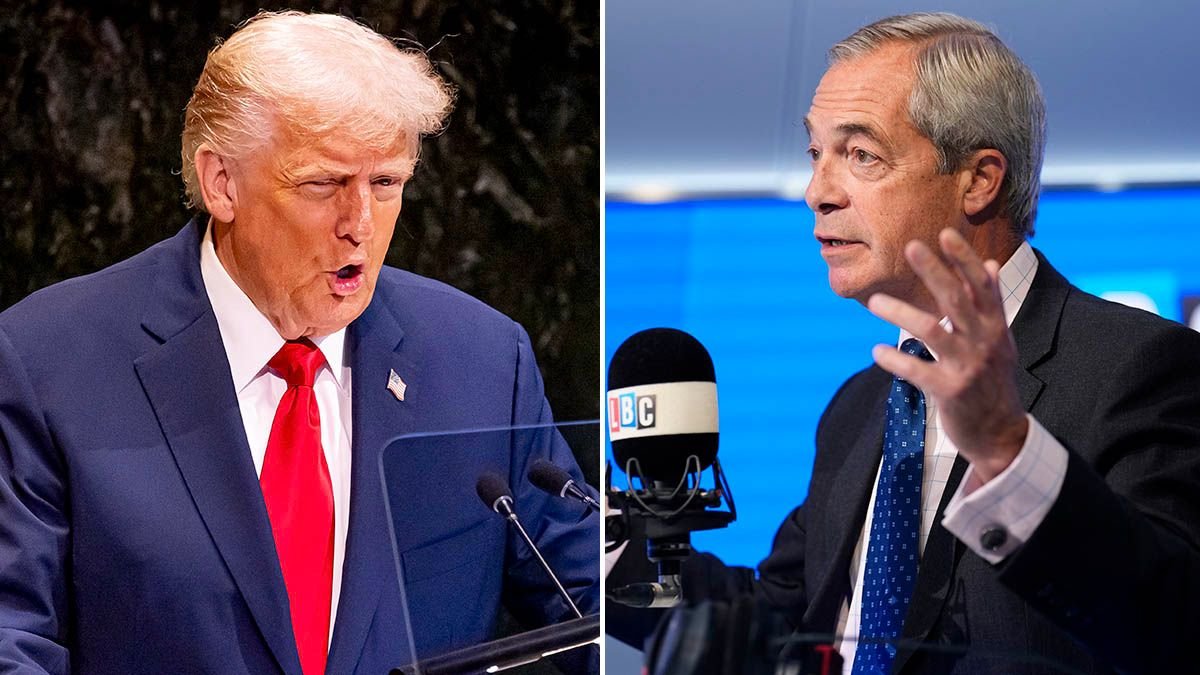

Nigel Farage faced criticism for his ambiguous stance on Donald Trump’s controversial claim linking paracetamol to autism. Farage, the leader of Reform UK, refrained from aligning with medical experts who cautioned against such assertions, citing the ever-evolving nature of science.
During an LBC interview, Farage expressed uncertainty when questioned about Trump’s statement, highlighting past instances where medical assumptions proved incorrect. He suggested that Trump’s personal experiences with autism within his family may influence his perspective.
When asked if he would support the medical community’s caution regarding the link, Farage emphasized his neutral stance on scientific matters, emphasizing the ongoing nature of scientific inquiry. Despite being pressed on the responsibility of a US president making such claims, Farage maintained his position of uncertainty.
In response to Farage’s comments, Health Secretary Wes Streeting criticized Farage, labeling him as the “snake oil salesman of British politics.” Streeting urged pregnant women to disregard Trump’s assertions and trust medical professionals, emphasizing the lack of evidence linking paracetamol use during pregnancy to autism.
Experts, including Dr. Steven Fleischman and Dr. Monique Botha, discredited Trump’s claim, emphasizing the absence of substantial scientific evidence supporting the link between paracetamol use during pregnancy and neurodevelopmental challenges in children. Botha highlighted the importance of providing adequate pain relief options for pregnant women, with paracetamol being considered a safer choice.
The controversy surrounding Trump’s statement has sparked debates on the intersection of politics and science, with critics condemning the dissemination of unfounded claims that could potentially impact public health decisions.