

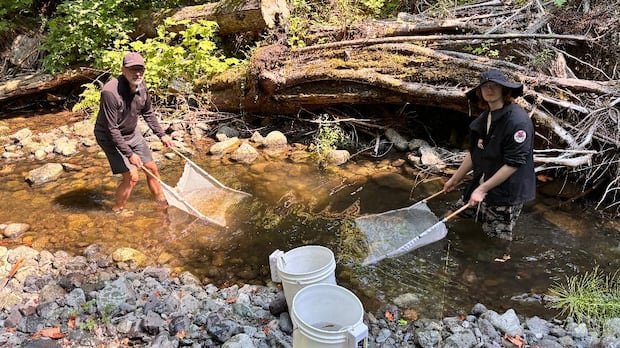

Parts of British Columbia are experiencing severe drought conditions this summer, impacting water sources and endangering salmon populations. In Bessette Creek, water restrictions were imposed to safeguard salmon from dwindling water levels. Temporary protection orders for the Salmon River watershed were also reinstated due to heightened wildfire risks. Bob Crandall, treasurer of the Cowichan Lake Salmonid Enhancement Society, highlighted the increasing dryness of streams connected to Lake Cowichan, necessitating manual fish rescues to prevent their demise.
Efforts led by Crandall, the Ts’uubaa-asatx Nation, and volunteers involve relocating fish like salmon, trout, and char to areas with more water. However, the task has become more challenging with changing climate patterns. The use of aerators and nets is crucial to ensure the fish’s survival during transportation. The society’s long-standing fry salvage activities have expanded due to worsening drought conditions, requiring significant manpower and resources.
The Ts’uubaa-asatx Nation plays a vital role in the conservation efforts, utilizing drones to monitor drying streams and aiding in fish relocation. Their commitment to preserving salmon as a keystone species reflects a holistic approach to ecosystem sustainability. Despite the challenges posed by extreme weather events, the collaborative initiatives aim to mitigate the adverse impacts on fish populations and their habitats.
Similar rescue operations in France are facing unprecedented challenges amidst severe drought and heatwaves. The Fédération de Pêche du Rhône highlighted the inadequacy of current management strategies in coping with extreme weather events. The physiological stress on fish due to rising water temperatures and limited resources underscores the urgency for comprehensive ecosystem restoration and adaptive water management practices. Prioritizing long-term solutions over short-term interventions like fish relocation is essential for ensuring the resilience of aquatic ecosystems in the face of climate change.