

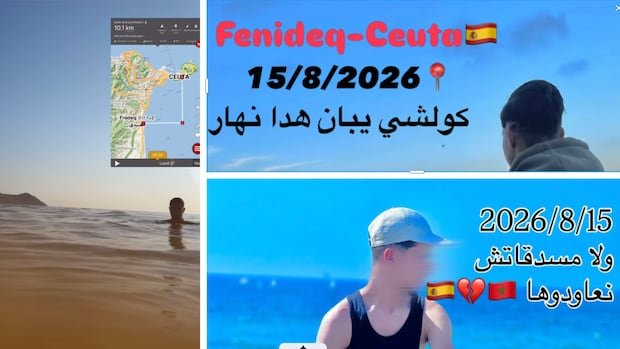

In the days leading up to a significant influx of migrants into Europe, a brief video shared on Instagram captured the attention of 1.4 million viewers. The video depicted a young man immersed in water up to his neck, followed by a view of land in the distance. A map in the top-right corner illustrated a sea route from Fnideq, Morocco, to Ceuta, a Spanish enclave in Africa. Subsequent comments by the account holder indicated a successful arrival.
This video was just one among many viral posts on platforms like Instagram and TikTok that seemed to play a role in organizing two waves of irregular migration from Morocco to Ceuta. The most recent attempt on August 15 resulted in numerous arrests.
These social media accounts were connected to various online communities focusing on migration-related content such as music, memes, and imagery. Some of these accounts seemed to exploit the aspirations of young individuals from Africa and the Middle East seeking better opportunities abroad for their own gain.
While there is debate regarding whether a single entity orchestrated the events in Ceuta or if migration was manipulated for geopolitical purposes, it is evident that misinformation, amplified by multiple online sources, contributed to the surge of migrants towards Ceuta during the summer.
CBC’s visual investigations team, with support from Sebastian Vandermeersch of Bellingcat, identified several active social media accounts, primarily on Instagram, leading up to the first wave on July 30. The spread of misinformation suggesting a change in Spanish policy towards sea arrivals triggered a surge in posts, resulting in over 72,000 people crossing the border on that day.
Despite the majority of individuals returning to Morocco, approximately 5,000 remain in Ceuta, with some tragic fatalities during the crossing attempts. The surge in social media activity over the past month highlights how misinformation and manipulation can have tangible consequences when targeted at vulnerable populations seeking answers.
Moving forward, efforts have been made by platforms like Meta and TikTok to fact-check posts to prevent criminal exploitation of migrants through misinformation. However, a subsequent wave of posts emerged before August 15, indicating another opportunity for entry into Spain, with familiar accounts from the initial crossing involved alongside new ones.
The allure of these messages among migrants can be attributed to previous successful entries into Ceuta, making it a popular entry point into Spain. While social media played a role in shaping perceptions of migration opportunities, it is essential to understand that the desire to migrate existed independently of online influences.
Accounts promoting migration aspirations emanate from various North African countries, with some hinting at European destinations without explicitly offering passage. The use of European flags and symbolic imagery further entices individuals seeking better prospects abroad.
The depth of desperation among the youth in these regions is evident in the response to such posts, reflecting high unemployment rates and limited opportunities at home. The messages of hope and opportunity portrayed online resonate with those seeking a better future, despite the risks involved in irregular migration.
The complex interplay of social media messaging, real-world aspirations, and geopolitical realities underscores the challenges in addressing irregular migration and the need for nuanced solutions beyond online interventions.