

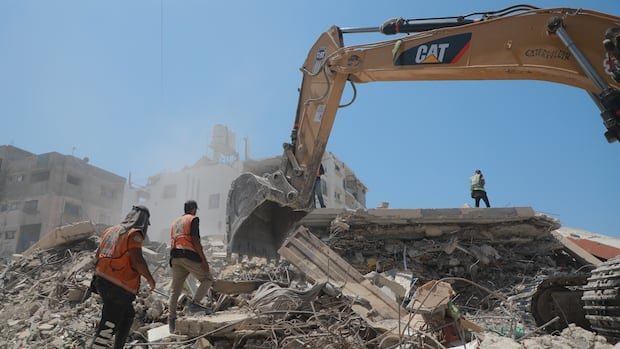

In Gaza City, members of the Al-Drimli family are tirelessly excavating the remains of a friend and neighbor from the debris of their collapsed home. Equipped with basic tools like shovels, buckets, and a wheelbarrow, they toil under the scorching midday sun, filled with determination.
The men, their heads shielded from the sun with orange towels or sweatshirt hoods, work silently amidst the clanging of shovels and the buzz of an electric saw. Despite their efforts, the task seems monumental as they only make a small dent in the massive piles of rubble left behind by an airstrike in November 2023 on a six-storey residential building.
Having already recovered the bodies of their own family members, the Al-Drimli family now seeks closure for a neighbor who perished in the same tragedy. According to the Gaza Health Ministry, an estimated 8,000 to 10,000 bodies remain buried under the rubble nearly three years after the conflict between Israel and Hamas began.
Facing a scarcity of excavators in Gaza, Ayman Al-Drimli expressed the family’s reliance on manual labor due to the high cost and limited availability of heavy equipment. Officials and operators in Gaza confirm that there are only around a dozen operational excavators in the region, struggling to function amidst a lack of resources for maintenance.
Samir Sabra and his son, Uday Sabra, operate two of the few remaining excavators in Gaza. Samir highlighted the exorbitant cost of running the machinery, emphasizing the challenges they face in maintaining their equipment due to the scarcity of spare parts and fuel.
Despite the ceasefire agreement last year allowing for increased access to heavy machinery, the situation on the ground remains grim. Mahmoud Basal, the spokesperson for the Palestinian Civil Defence, lamented the deliberate targeting of heavy machinery during the conflict, hindering the recovery efforts.
Urgent calls have been made by humanitarian aid groups and Civil Defence for international intervention to facilitate the entry of essential supplies and equipment into Gaza. However, border restrictions imposed by Israeli authorities continue to impede these crucial efforts, prolonging the agonizing process of recovering the remains buried under the rubble.
As Uday Sabra perseveres in his excavation work, he remains committed to providing closure to families and honoring the deceased by diligently sifting through the rubble until the last victim is found.