

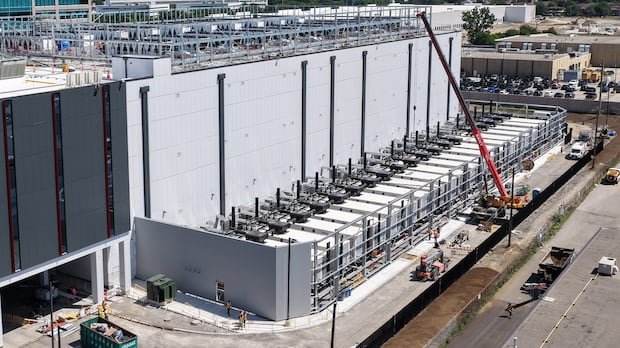

Ontario Premier Doug Ford unveiled the province’s fresh data center framework on Thursday, emphasizing the safeguarding of Canadians’ data within the country. The framework is structured around three core principles: boosting economic development, ensuring data protection and sovereignty, and enhancing community investment and public trust.
Ford, speaking in Guelph during the announcement, highlighted the significance of the new data center playbook in shaping a robust economy for the future. He emphasized the potential for substantial economic growth, increased tax revenues, job creation, and the importance of data centers operating within regulatory guidelines.
Under the framework, data centers are mandated to cover the full extent of their electricity consumption costs, encouraging self-sufficient power generation projects and establishing a distinct rate category for large new data centers. This rate category will surpass existing industrial rate programs for major electricity consumers, with no additional costs burdening Ontario families.
The province of Ontario affirmed its commitment to not provide financial incentives to attract investments, positioning the framework as a pivotal enabler for its artificial intelligence (AI) strategy. The AI strategy is projected to yield significant economic growth of $122 billion by 2035 and facilitate the annual creation of 17,000 new jobs.
Recent deliberations by municipalities across the province on imposing moratoriums on data centers, such as Oakville’s recent one-year moratorium, have underscored the ongoing discussions. Mississauga is set to vote on its own moratorium in September.
Green Party of Ontario leader Mike Schreiner and Ilham Abdulkadir from Wellington Water Watchers have raised concerns about data centers’ environmental impact and water usage. The province, led by Vic Fedeli, aims to prioritize data centers employing closed-loop water systems to minimize water consumption.
While acknowledging the importance of data protection and recognizing the inevitable role of data centers in the future, Schreiner emphasized the need for strong regulations to safeguard communities and ensure their control over data center developments. The Green Party of Ontario advocates for a moratorium until robust regulations are in place to protect communities from potential negative impacts.
Waterloo region has also been actively assessing the local implications of data center expansions, with Coun. Colleen James calling for an information report to educate elected officials on the economic and environmental aspects of data center developments. The report is expected to be completed early next year, shedding light on the ongoing dialogue surrounding data center growth in the region.