

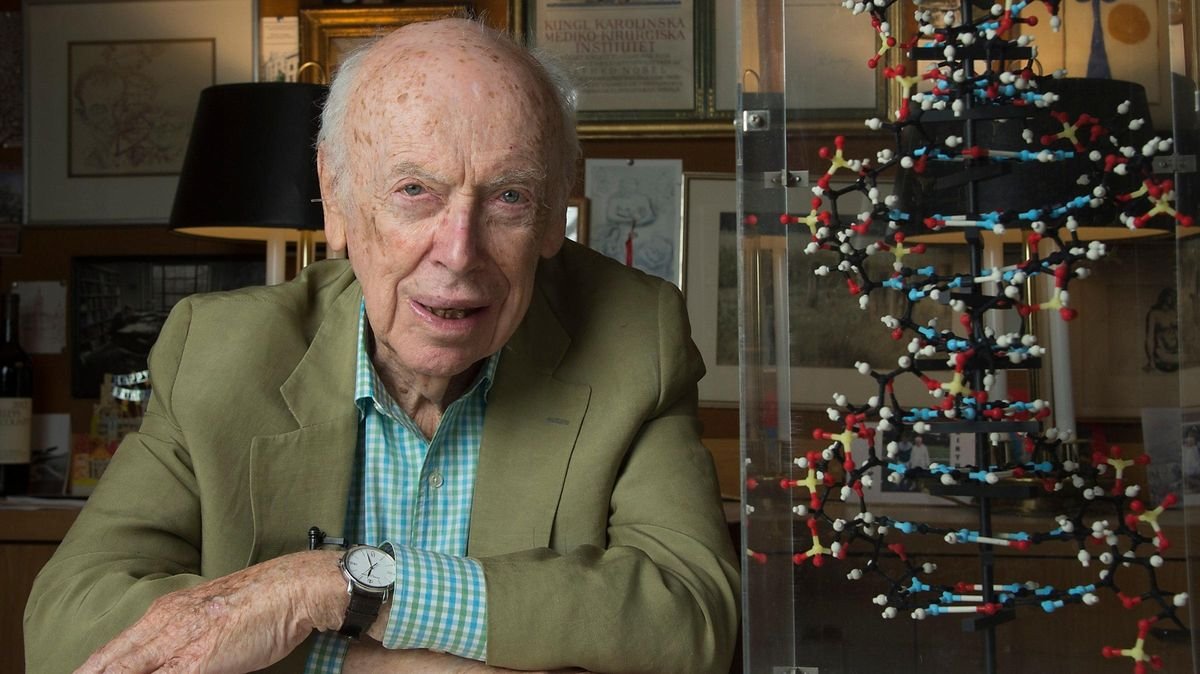

Renowned scientist James Watson, a recipient of the Nobel Prize for his groundbreaking work on DNA, has passed away at 97 years old.
His collaboration in unveiling the double helix structure of DNA in 1953 alongside his colleague Francis Crick sparked significant advancements in various fields like medicine, forensics, genealogy, and ethics. Cold Spring Harbor Laboratory, where Watson dedicated years of research, confirmed his demise.
The DNA breakthrough, achieved when Watson was just 24, catapulted him to prominence in the scientific community for decades. However, in his later years, he faced backlash and professional repercussions for making controversial statements, including assertions about intelligence disparities between racial groups.
Watson, along with Crick and Maurice Wilkins, was honored with the Nobel Prize in 1962 for their discovery of DNA’s double helix structure, illustrating how genetic information is stored and replicated during cell division.
This pivotal revelation not only became a universally recognized symbol of science but also paved the way for modern innovations such as genetic engineering, gene therapy, forensic analysis, and ancestry tracing.
Despite the groundbreaking nature of his early work, Watson’s later contributions included influential publications, mentoring young scientists, and advocating for science policies, notably his involvement in the Human Genome Project.
His personal connection to the project stemmed from a desire to understand his son’s potential health condition, highlighting the importance of DNA research in comprehending complex diseases like schizophrenia.
In 2007, Watson faced criticism for controversial remarks on race and intelligence, drawing attention to broader societal debates on equality and diversity in scientific discourse.
James Watson’s legacy extends beyond his notable achievements in DNA research, reflecting a complex mix of scientific brilliance, personal motivations, and societal controversies.