

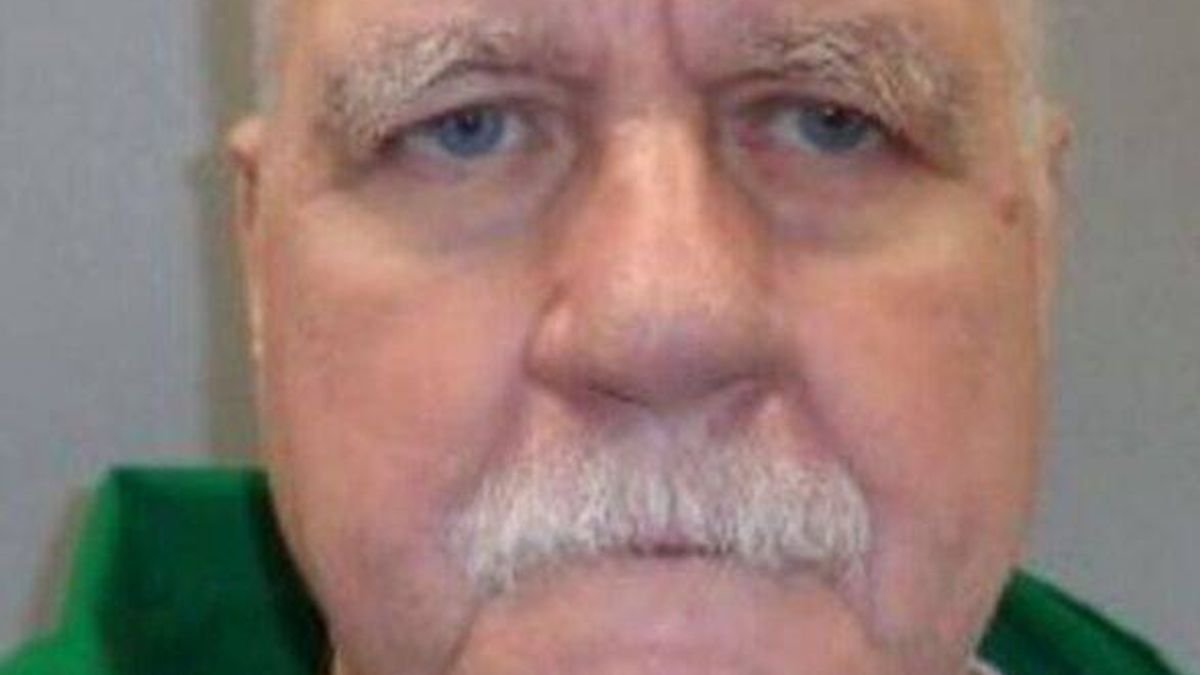

The United States achieved a somber milestone in August by carrying out its first firing squad execution in 15 years. This marks only the fourth instance of using this method since the reinstatement of capital punishment in the country.
A 67-year-old double murderer named Brad Signmon met his demise through a hail of bullets on Friday, March 7, in a historic event as the prison opted for this unconventional execution method. There are indications that this may not be the last time such a method is chosen.
Despite the Eighth Amendment prohibiting ‘cruel and unusual punishment’ for prisoners, botched executions continue to happen frequently across America. Reports have surfaced detailing disturbing incidents of inmates suffering in agony, with deaths extending up to an hour and occurrences of ‘spurting blood’ due to accidental artery injuries.
This ongoing debate has garnered attention as the experiences of death row prisoners are chronicled in a new publication. Author Gianna Toboni documents the story of a man who pleaded for his life to end, shedding light on the factors pushing prisons towards more traditional ‘reliable’ execution methods.
The publication titled “The Volunteer: The Failure of the Death Penalty in America and One Inmate’s Quest to Die with Dignity” recounts an electrocution incident involving an Alabama man named John Louis Evans, who endured three electric shocks over 14 minutes before his heart stopped when his body caught fire.
In 1994, the electric chair was deemed ‘unreliable’, leading to David Lawson becoming the first prisoner in three decades to be executed by lethal gas. The account describes Lawson’s distressing final moments as he pleaded for his life in North Carolina’s death chamber.
Following these harrowing events, lethal injection was introduced in 1977 and quickly became the preferred method of execution on death row in most states. However, issues arose with the three-drug protocol, resulting in numerous botched executions over the years, including seven in 2022, earning it the moniker ‘year of the botched execution.’
In a notable case, murderer Thomas Creech’s execution in Idaho was canceled in February 2024 after medical personnel struggled for over an hour to find a suitable vein for injection. This incident was later cited as a reason why another death row inmate, Bryan Kohberger, should not face capital punishment.
The challenge of locating veins is a common issue, with a particularly gruesome incident occurring in April 2014 during Clayton Lockett’s execution in Oklahoma. Despite difficulties, the execution proceeded, but Lockett regained consciousness after receiving the lethal drugs, taking 43 minutes to die as he thrashed violently.
Former Utah state representative Paul Ray, who advocated for the return of the firing squad method, defended its use by highlighting the heinous crimes committed by the prisoners. He emphasized that the severity of their actions justifies the use of such methods, citing the brutality inflicted on their victims.
Ray stated, “The whole situation of taking a life is not pretty. If you have the death penalty, you have to find a way to carry it out effectively and acknowledge that it cannot be sugarcoated, which has been attempted with lethal injections, or else abolish it.”