

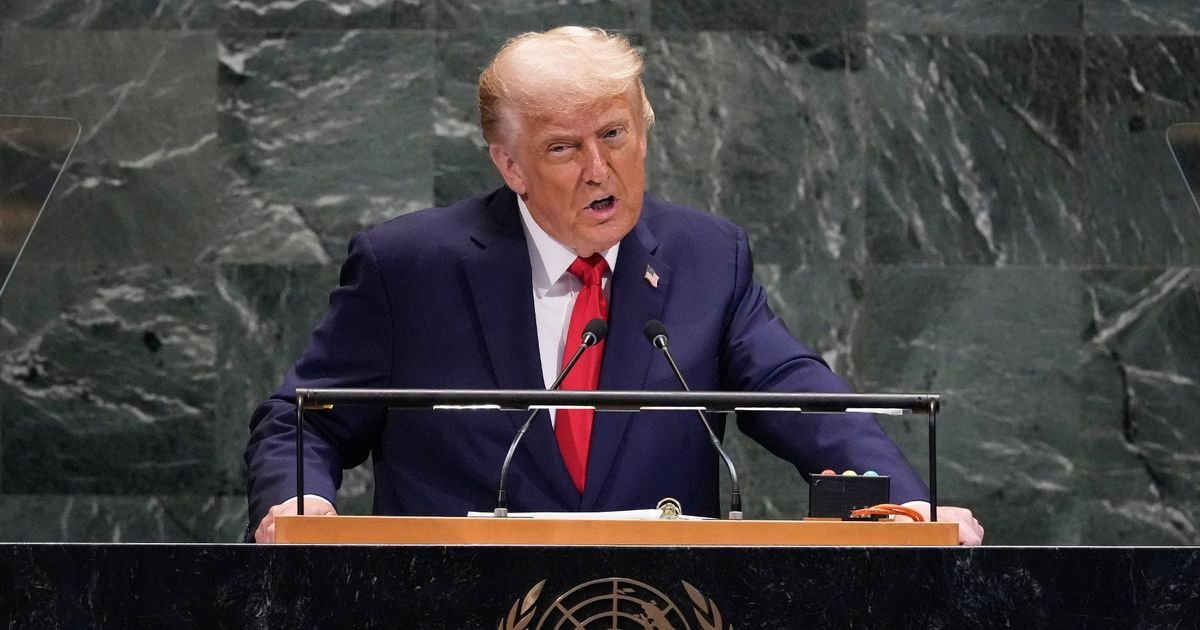

In a speech at the United Nations, President Donald Trump criticized European leaders, stating that their countries are facing significant challenges. He highlighted concerns about immigration, suggesting that it is negatively impacting European nations. Trump also called for the opening of more oil fields in the North Sea, dismissing global warming as a “hoax.” Furthermore, he reignited his dispute with London Mayor Sadiq Khan, making unfounded claims about Khan’s intentions regarding Sharia law in the city.
During his address, Trump expressed disappointment in the UN’s effectiveness, alleging corruption within the organization. He shared a personal anecdote about a past bid to renovate the UN headquarters, emphasizing his superior proposals compared to the actual outcome. Trump criticized the UN for its perceived inaction in resolving conflicts, claiming he had to intervene in seven wars without UN support.
The President questioned the purpose of the United Nations, emphasizing the organization’s unfulfilled potential and accusing it of issuing mere written warnings. Trump also lambasted Europe for its immigration policies, asserting that the continent is facing a crisis due to an influx of illegal migrants. He specifically targeted London and Mayor Sadiq Khan, denouncing the city’s purported transformation and insinuating a move towards Sharia law.
Additionally, Trump urged Keir Starmer to expand oil exploration in the North Sea, dismissing renewable energy efforts and criticizing wind energy projects. He condemned the Paris Climate Accord and highlighted his opposition to wind farms, citing concerns about their impact on the countryside. Trump also addressed the issue of Palestinian Statehood recognition at the UN, advocating for immediate action to address the situation in Gaza.
At the conclusion of his speech, delegates responded with applause to Trump’s call for action on various global issues. The President reiterated his stance on key policy matters, emphasizing his administration’s priorities and criticizing perceived shortcomings in international governance.